 Save
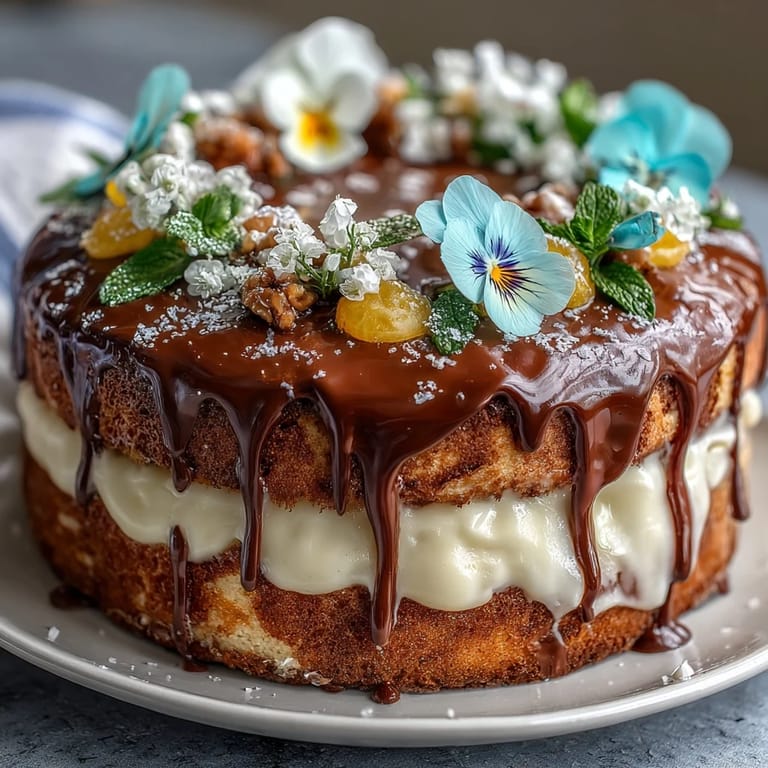
Save My sister called in a panic two weeks before her spring garden party, asking if I could make something that looked like it belonged in a magazine. I'd never attempted a drip cake before, but there was something about the combination of bright lemon and delicate flowers that felt like the answer. That afternoon, I discovered that baking something this beautiful isn't nearly as intimidating as it looks, and honestly, the imperfections are what made it perfect.
When I pulled that cake out of the refrigerator for my sister's party, the afternoon light hit it just right, and she actually gasped. It wasn't just food at that moment, it was proof that we'd made something together that brought joy to people we loved. That's when I realized this recipe isn't really about precision or perfection, it's about creating a moment worth remembering.
Ingredients
- All-purpose flour: The foundation of a tender crumb, and measuring by weight rather than cups makes a real difference in consistency.
- Baking powder: Fresh baking powder matters more than you'd think, so check that expiration date before you start.
- Unsalted butter: Using unsalted lets you control the salt and ensures the lemon flavor shines through without competition.
- Granulated sugar: Creaming this with butter until light and fluffy is where the cake's tender texture actually begins.
- Room temperature eggs: Cold eggs resist mixing in and can create a dense, lumpy batter, so let them sit out for thirty minutes.
- Vanilla extract: Use the real thing here because the vanilla needs to support the lemon, not overpower it.
- Whole milk: Room temperature milk incorporates smoothly and won't shock the batter temperature.
- Powdered sugar: Sifting it removes lumps and gives you a frosting that's actually smooth and spreadable.
- Fresh lemon juice and zest: The zest delivers brightness that juice alone can't achieve, creating a frosting that tastes both sophisticated and cheerful.
- White chocolate chips: Quality matters here because cheap white chocolate can taste waxy and separate when heated.
- Heavy cream: This creates the silky ganache that drips beautifully down the cake sides.
- Edible flowers: Source these from specialty grocers or growers you trust, never from a florist, because those are treated with chemicals.
Tired of Takeout? 🥡
Get 10 meals you can make faster than delivery arrives. Seriously.
One email. No spam. Unsubscribe anytime.
Instructions
- Set up your station:
- Preheat the oven to 350°F and get those three cake pans ready with parchment, because once you start mixing you won't have time to fuss. Lining the pans takes five minutes but saves you the heartbreak of a cake that sticks.
- Mix the dry ingredients:
- Whisk flour, baking powder, and salt together in a medium bowl. This distributes the leavening evenly so your cake rises consistently across all three layers.
- Cream butter and sugar:
- Beat them together for three to four minutes until the mixture looks pale and fluffy, almost like soft serve ice cream. This incorporates air, which is what makes the cake light and tender rather than dense.
- Add eggs one at a time:
- After each egg goes in, beat well before adding the next one. If you dump them all in at once, the batter breaks and you end up with an oily, separated mess that bakes up tough.
- Fold in vanilla and the dry mixture:
- Add vanilla extract, then alternate adding flour and milk, starting and ending with flour. Mix gently until just combined, because overmixing develops gluten and toughens the cake.
- Divide and bake:
- Pour batter evenly among the three pans, then bake for twenty-five to thirty minutes until a toothpick comes out clean. Let them cool in the pans for ten minutes so they set, then turn them out to cool completely on wire racks.
- Make the lemon frosting:
- Beat softened butter until creamy, then gradually add powdered sugar so you don't end up with a cloud of sugar in your kitchen. Stir in lemon juice, zest, and just enough milk to get a spreadable consistency that holds its shape.
- Layer and frost:
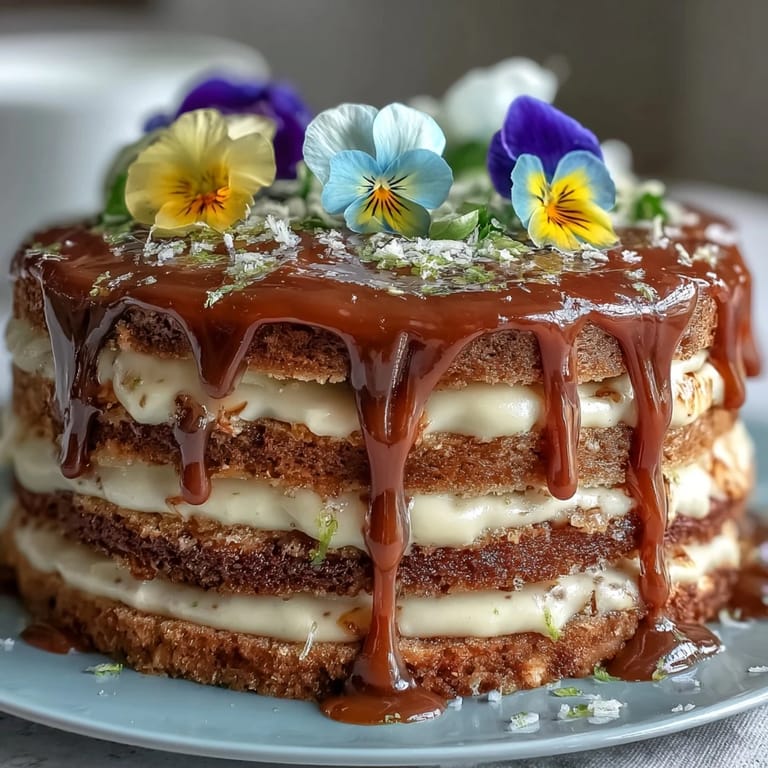
- Place one cake layer on your serving plate, spread frosting on top, repeat with the remaining layers, then frost the top and sides smoothly. An offset spatula or even a butter knife works fine for this.
- Create the white chocolate drip:
- Heat heavy cream until steam rises and small bubbles form around the edges, then pour it over chopped white chocolate and let it sit for two minutes. Stir gently until smooth and glossy, tinting with gel food coloring if you want pastel shades that coordinate with your flowers.
- Drip and decorate:
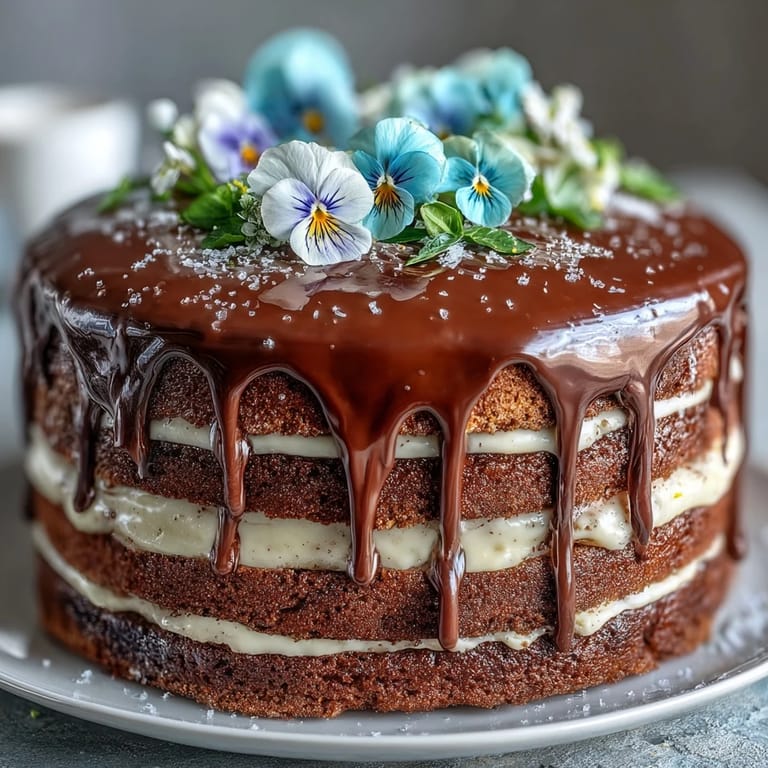
- Once the ganache cools to a slightly thickened but still pourable consistency, use a spoon or squeeze bottle to drip it around the cake's edge so it cascades down the sides dramatically. Scatter edible flowers, sprinkles, and lemon zest on top while the ganache is still tacky so everything sticks.
 Save
Save My hands shook a little when I first dripped that white chocolate down the side of the cake, worried it would look amateurish or ugly. What I learned was that imperfection is actually what makes homemade cakes feel genuine and charming, and people respond to the care you've put in, not flawless execution.
Why This Cake Works for Spring
Lemon frosting pairs naturally with spring because citrus mirrors the season's brightness and energy without feeling heavy or wintery. The lightness of vanilla sponge means you can eat a slice after a big meal without feeling stuffed, and edible flowers transform it from a dessert into a centerpiece that's also delicious.
Making This Cake Your Own
Once you master the basic structure, you can experiment endlessly with this recipe. Swap lemon for lime or orange zest, use different edible flowers depending on what's in season, or even add a touch of floral liqueur to the ganache for an adults-only version.
Storage and Serving Secrets
This cake actually tastes better the next day because the flavors marry and the frosting firms up beautifully. Store it covered in the refrigerator for up to three days, and bring it to room temperature for thirty minutes before serving so the frosting softens just enough to be luxurious.
- Pair slices with sparkling wine, champagne, or a proper cup of Earl Grey tea for the most elegant experience.
- If you're transporting the cake somewhere, keep it in the refrigerator until just before serving to prevent the white chocolate drip from melting.
- Leftover edible flowers can be candied with a light egg white and sugar coating for future decorating moments.
 Save
Save This cake is proof that you don't need a professional pastry degree to create something stunning that brings people together. Bake it with confidence and let the joy of making something beautiful be the real magic.
Recipe FAQs
- → What flowers are safe for decoration?
Use pesticide-free, edible flowers such as violets, pansies, or rose petals to ensure safety and enhance visual appeal.
- → How do I achieve the white chocolate drip consistency?
Heat heavy cream until simmering, pour over white chocolate, stir until smooth, then cool slightly until pourable but thick enough to drip slowly.
- → Can I make the cake gluten-free?
Yes, substitute all-purpose flour with a 1:1 gluten-free flour blend without altering other ingredients.
- → How long can the cake be stored?
Store in the refrigerator for up to 3 days and bring to room temperature before serving for best texture and flavor.
- → What beverages pair well with this dessert?
Pair this cake with sparkling wine or Earl Grey tea to complement its citrus and floral notes elegantly.