 Save
Save My mother once mentioned, almost in passing, that pavlova reminded her of clouds she could actually eat. That comment stuck with me through years of burnt meringues and collapsed centers until one quiet Sunday morning, when the kitchen was perfectly still and the humidity outside had finally broken, I decided to try again. The moment that first golden-crisp shell emerged from the oven, still warm and impossibly delicate, I understood what she meant. It wasn't just dessert—it was edible air, and suddenly I had something worth celebrating her with.
I made this for my mother's birthday last spring, and what I remember most isn't the compliments but her quiet smile as she took that first bite, the way her eyes closed for just a second. My sister had brought store-bought desserts before, beautiful things from expensive bakeries, but there was something different about homemade meringue—something that said I showed up for you, I learned something new, I got my hands a little messy trying. That's when pavlova stopped being a recipe and became a ritual.
Ingredients
- Egg whites (4 large, room temperature): Cold eggs won't whip to the right volume, so pull them out about 30 minutes before you start—I learned this the hard way after three collapsed batches.
- Superfine sugar (1 cup): This dissolves faster than regular sugar and keeps the meringue silky; if you only have regular sugar, pulse it briefly in a food processor to break down the crystals.
- Cornstarch (1 tsp): This tiny amount is the secret to that marshmallow-soft center—it prevents the pavlova from drying out completely in the oven.
- White vinegar (1 tsp): Don't skip this; it stabilizes the egg whites and adds a subtle brightness that keeps the sweetness from becoming cloying.
- Vanilla extract (1 tsp pure): Use real vanilla, not imitation—the flavor matters more here than in almost any other recipe.
- Heavy whipping cream (1 cup, chilled): Keep both the bowl and beaters cold for faster whipping, and stop as soon as soft peaks form or you'll end up with grainy butter.
- Mixed berries (4 cups total): Use whatever's at its peak in your market; strawberries and raspberries break down quickly, so arrange them just before serving.
- Mint leaves and powdered sugar (optional): A whisper of mint brightens all those berries, and a final dusting of powdered sugar catches the light beautifully.
Tired of Takeout? 🥡
Get 10 meals you can make faster than delivery arrives. Seriously.
One email. No spam. Unsubscribe anytime.
Instructions
- Prepare Your Station:
- Preheat the oven to 250°F and line your baking sheet with parchment paper, then trace a 9-inch circle lightly with a pencil as your guide—this stops you from second-guessing the size as you spread. Make sure your mixing bowl and beaters are completely dry and grease-free; even a tiny drop of oil or egg yolk will sabotage the whites.
- Whip the Egg Whites:
- In your dry bowl, beat the room-temperature whites with a pinch of salt until they turn foamy and you can see soft peaks forming when you lift the beaters. This should take about 2-3 minutes; you're not in a rush yet, and overbeating at this stage is almost impossible.
- Add Sugar Gradually:
- Now sprinkle in the superfine sugar one tablespoon at a time, beating after each addition until it's incorporated—this slow approach keeps the mixture glossy instead of grainy. After about 5-6 minutes, when you lift the beaters, stiff, shiny peaks should stand straight up; this is your signal that you're done.
- Fold in the Extras:
- Sprinkle the cornstarch, vinegar, and vanilla over the top, then use a spatula to gently fold these in with as few strokes as possible—you want to keep all that air you just whipped into place. Stop as soon as you don't see any white streaks; overmixing deflates everything.
- Shape Your Nest:
- Spoon the meringue onto the center of your traced circle and use the back of a spatula to spread it outward, leaving the edges slightly higher than the center so it looks like a nest waiting to be filled. Don't aim for perfection here—rustic looks prettier and more impressive.
- Bake Low and Slow:
- Slide it into the oven for 1 hour and 15 minutes; the pavlova should turn pale golden and feel crisp on the outside when you gently tap it. Turn off the heat, crack the oven door open a few inches, and let it cool inside for at least an hour—this slow cooling prevents cracking and keeps that marshmallow center tender.
- Whip the Cream:
- While the meringue cools, pour your chilled cream into a cold bowl and whip it with the powdered sugar and vanilla until soft peaks form—this takes about 2-3 minutes with a mixer. Watch carefully because it goes from perfect to overwhipped in seconds, and you don't want grainy cream ruining your moment.
- Assemble and Serve:
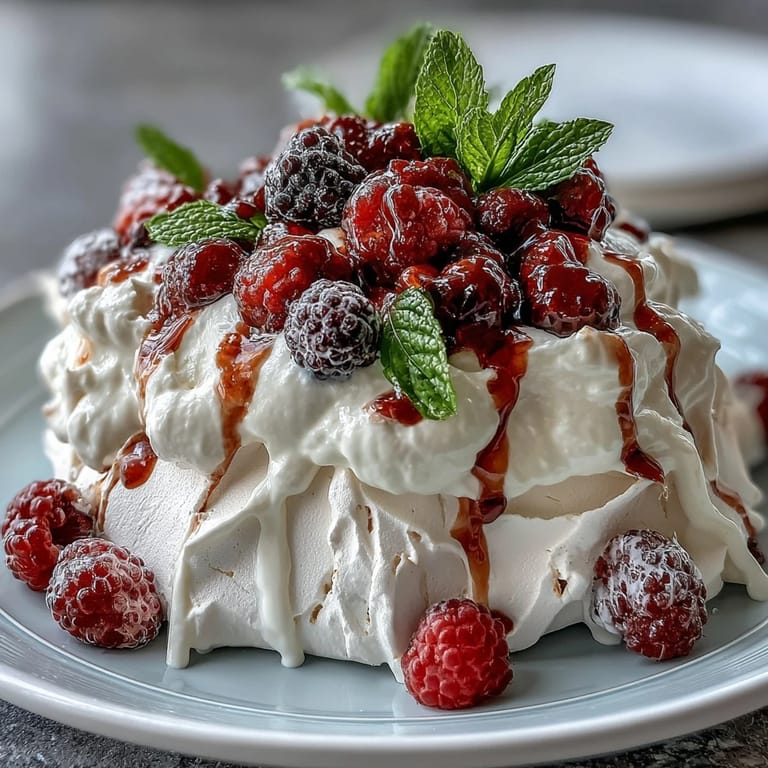
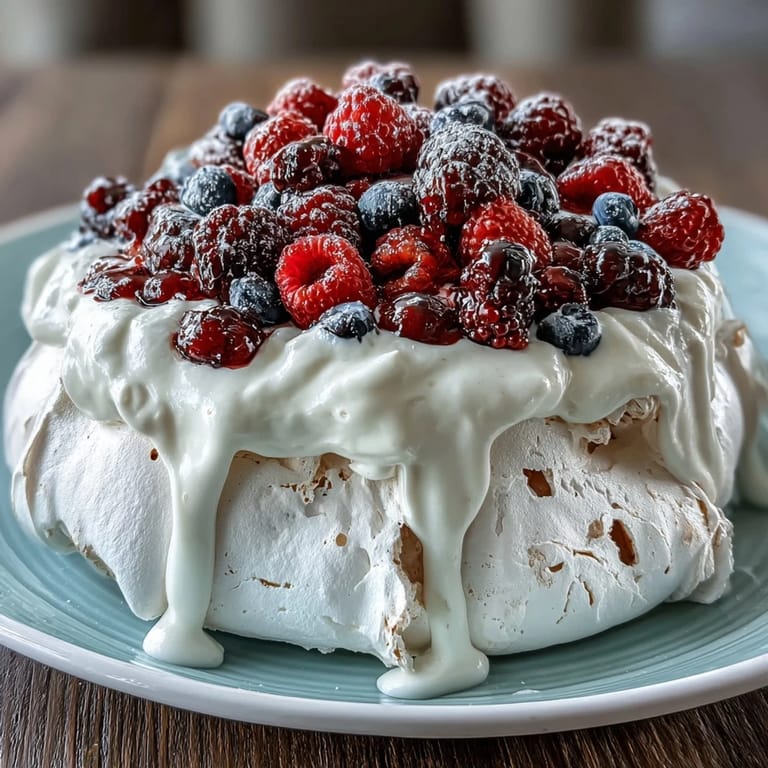
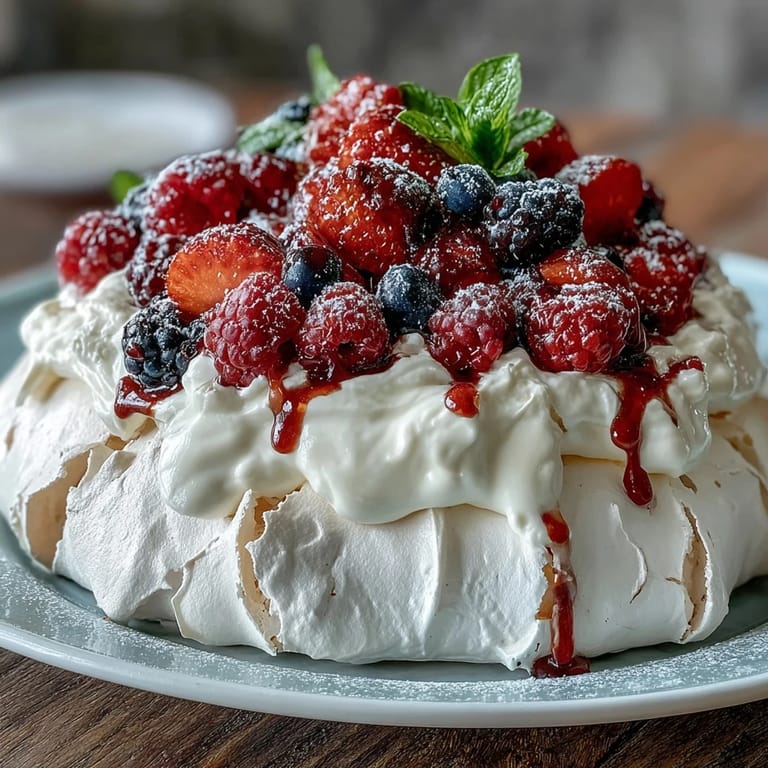
- Once the meringue is completely cool, transfer it carefully to your serving platter, top it with a generous dollop of whipped cream, then arrange your berries in a way that makes you happy. Dust with powdered sugar and scatter fresh mint right before people see it, which keeps everything looking fresh and bright.
 Save
Save Years later, I watched my own daughter take a bite of pavlova I'd made for her birthday, and I saw that same quiet moment of joy my mother had. In that instant, I realized this dessert had become something I was passing down—not just a recipe, but a way of saying I see you, you're worth the care.
Why Humidity Matters More Than You'd Think
The first time I made pavlova on a humid afternoon, I pulled a beautiful shell from the oven only to watch it weep syrupy pools of sugar within an hour—a heartbreaking moment that taught me to check the weather forecast before planning this dessert. Meringue is mostly air, and moisture in the air absorbs into those tiny bubbles, turning them from crisp to sticky. Now I save pavlova for clear, dry days, or I make it early in the morning when the air is still cool and fresh. If you live somewhere humid year-round, an air-conditioned kitchen with the door closed is your best bet.
Building Flavor Beyond the Berries
While berries are the traditional crown, I've discovered that pavlova is a canvas waiting for your creativity. One winter, I folded a bit of sifted cocoa powder into the meringue before baking, creating a subtle chocolate flavor that played beautifully with raspberries, and I've also experimented with a hint of lemon zest whisked into the whites for brightness. The key is restraint—you want the meringue itself to remain the star, with these additions just whispering in the background.
Timing Your Assembly for Maximum Impact
The magic of pavlova is that you can bake the shell a full day ahead, tucking it into an airtight container where it'll stay crisp and waiting, then assemble everything just an hour or two before serving. This flexibility is what makes it perfect for entertaining—you're not scrambling at the last minute or serving something that's been sitting around getting soggy. The whipped cream can go on earlier if you're in a cool kitchen, but the berries must wait until the very last moment to stay plump and glossy.
- Bake the meringue shell the day before and store it in an airtight container at room temperature to keep it completely dry.
- Whip your cream no more than 2-3 hours before serving, and keep it in the fridge until the final assembly moment.
- Add berries and dust with powdered sugar just before your guests see it, so everything looks impossibly fresh and vibrant.
 Save
Save This pavlova has become my favorite way to celebrate the people I love, because it says everything words sometimes can't—that I spent time, paid attention to details, and believed the moment was worth the effort. Make it for someone who matters.
Recipe FAQs
- → How do I achieve a crisp meringue shell?
Beat egg whites to stiff peaks and bake slowly at a low temperature to dry out the meringue, creating a crisp exterior while keeping the inside soft.
- → Can I substitute the mixed berries with other fruits?
Yes, seasonal fruits like kiwi, peaches, or passionfruit offer a delicious alternative topping for variety and freshness.
- → What tips help prevent meringue cracking?
Cool the pavlova gradually by turning off the oven and leaving the door slightly open to avoid sudden temperature changes that cause cracks.
- → Is it possible to add a chocolate flavor to the base?
Yes, folding sifted cocoa powder into the meringue mixture before baking adds a subtle chocolate twist.
- → How can I ensure the whipped cream stays stable on top?
Use chilled heavy cream and beat it to soft peaks just before topping to maintain a light and fluffy texture.