 Save
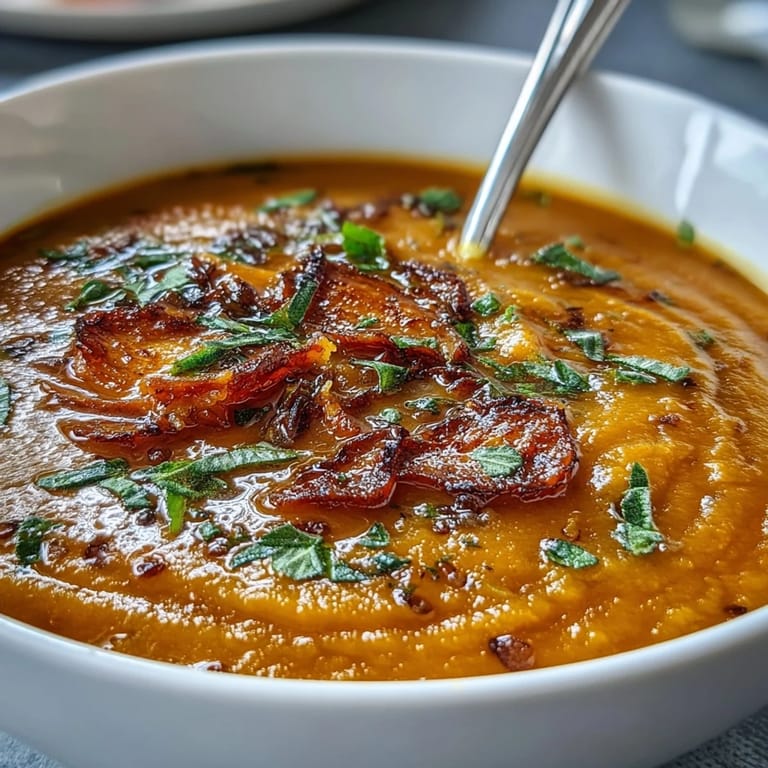
Save There's something about a bowl of butternut squash soup that stops time on a hectic afternoon. I discovered this particular version while scrolling through my phone on a rainy Tuesday, but what made it stick was how the spices—cumin, turmeric, cinnamon—transformed something so simple into something that tasted like comfort wrapped in a spoon. My kitchen filled with this warm, earthy smell that had my partner wandering in asking what was happening on the stove before it was even close to done.
I made this for a friend who'd been under the weather, and watching her face soften as she tasted it reminded me why homemade soup matters. She asked for the recipe that same evening, and I realized it wasn't just the flavor—it was the fact that something warm and intentional had been made specifically for her.
Ingredients
- Butternut squash: Roasting it first brings out natural sweetness and deepens the flavor in ways boiling never could; the golden edges are where the magic happens.
- Red lentils: They're forgiving and dissolve beautifully into the broth, which is why I reach for them instead of heartier varieties in soup.
- Carrots and onion: These are your flavor foundation, and taking time to soften them properly makes the whole soup taste more developed and intentional.
- Garlic: Three cloves might seem specific, but that's because it needs to be present without overpowering the warmth of the spices.
- Ground cumin, coriander, turmeric, cinnamon, and smoked paprika: This combination is what turns a simple vegetable soup into something that feels like a ritual; don't skip the smoked paprika, it adds a subtle depth that's hard to identify but impossible to miss.
- Vegetable broth and water: Using both lets you control the intensity of the broth flavor, which matters if yours is particularly salty or mild.
- Olive oil: Use it for roasting and sautéing, and quality matters here since it's a key flavor player, not just a cooking medium.
- Lemon juice: This hits at the very end and brightens everything up, cutting through the richness so the soup tastes alive instead of heavy.
Tired of Takeout? 🥡
Get 10 meals you can make faster than delivery arrives. Seriously.
One email. No spam. Unsubscribe anytime.
Instructions
- Set your oven and prep:
- Preheat to 400°F and line a baking sheet with parchment; this makes cleanup easier and prevents sticking when the squash caramelizes.
- Roast the butternut squash:
- Toss cubed squash with olive oil, salt, and pepper, spread it out in a single layer, and let it roast for 25–30 minutes until the edges are golden and a fork slides through easily. This is when your kitchen starts smelling like autumn, even if it's summer.
- Build your flavor base:
- While the squash roasts, heat the remaining olive oil in a large pot over medium heat and add onion and carrots. Let them soften for about 5 minutes, stirring occasionally, then add minced garlic and cook just 1 more minute until fragrant.
- Toast the spices:
- Stir in cumin, coriander, turmeric, cinnamon, and smoked paprika, cooking for just 30 seconds until the spices release their aroma; this small step is what separates a good soup from a memorable one.
- Simmer everything together:
- Add the roasted squash, red lentils, vegetable broth, and water to the pot and bring to a boil. Reduce heat and simmer uncovered for 20 minutes, until the lentils have completely softened and started to break down into the broth.
- Blend until smooth:
- Remove from heat and use an immersion blender to puree the soup directly in the pot, working in sections if needed; if using a standard blender, work in careful batches and never fill it more than halfway. The transformation from chunky to silky happens quickly.
- Finish with brightness:
- Stir in the lemon juice, taste, and adjust salt and pepper until it tastes balanced. The lemon should make you notice the flavors more, not taste lemony.
- Serve with intention:
- Ladle into bowls and top with fresh cilantro or parsley if you have it; a drizzle of good olive oil on top adds richness and visual appeal.
 Save
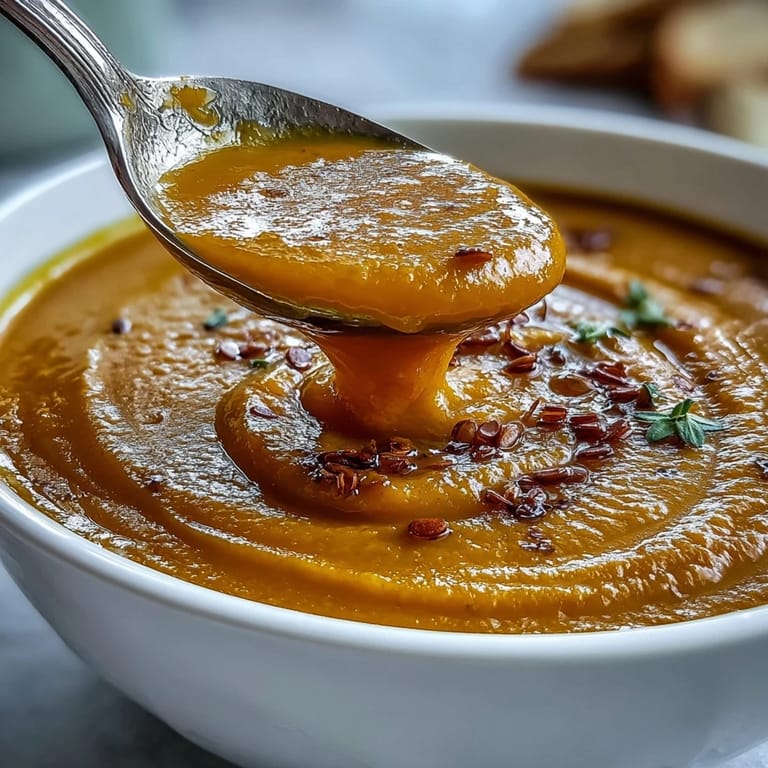
Save There's a moment while blending when all the separate ingredients—the soft squash, the broken-down lentils, the spiced broth—suddenly become one unified, silky thing. That's when it stops being a soup you're making and becomes the soup you're about to eat.
Making It Creamier
If you want extra richness without dairy, add 1/4 cup coconut milk right before blending or stir it in at the end. Grated fresh ginger added with the garlic also deepens the warmth and adds a subtle bite that makes people ask what that extra something is.
Storage and Serving Ideas
This soup keeps beautifully in the refrigerator for 4 days and actually tastes better the next day as the flavors deepen and settle. It freezes well for up to 3 months, though the texture becomes slightly less silky after thawing, so it helps to give it a quick blend with a little extra broth if needed. Serve it with crusty bread, a dollop of coconut yogurt, or even a scattering of toasted pumpkin seeds for texture.
Variations and Swaps
Yellow lentils work just as well as red if that's what you have, though they're slightly more delicate and soften even faster. You can substitute the butternut squash with kabocha or acorn squash, or even roasted sweet potato if you want something slightly earthier. If smoked paprika isn't on your shelf, regular paprika works but use 1/2 teaspoon instead to avoid a paprika-forward flavor.
- Add 1 tablespoon of miso paste dissolved in a little warm water just before serving for umami depth.
- Finish with a squeeze of lime instead of lemon if you want brightness with a different character.
- Roast the carrots and onion alongside the squash if you want even deeper caramelization throughout the whole soup.
 Save
Save This soup has a way of becoming something you make on repeat, not because it's complicated but because it tastes like you put thought into it. That's the whole point.
Recipe FAQs
- → Can I make this soup without roasting the squash first?
Yes, you can skip roasting and add raw cubed squash directly to the pot. Simmer for 30-35 minutes until everything is tender. Roasting adds caramelized sweetness, but stovetop cooking still yields a delicious result.
- → How long does this soup keep in the refrigerator?
This soup stores beautifully for 4-5 days in an airtight container. The flavors deepen overnight, making it excellent for meal prep. Reheat gently on the stovetop, adding a splash of water if needed.
- → Can I freeze butternut squash lentil soup?
Absolutely. Freeze in portion-sized containers for up to 3 months. Thaw overnight in the refrigerator, then reheat on the stovetop. The texture remains creamy and smooth after freezing.
- → What can I substitute for red lentils?
Yellow lentils work perfectly as a substitute. Green or brown lentils hold their shape better and won't create the same velvety texture, but still taste delicious. Adjust cooking time accordingly.
- → How do I make the soup extra creamy?
Blend thoroughly for maximum smoothness. For richer creaminess, stir in 1/4 cup coconut milk, cashew cream, or a dollop of Greek yogurt before serving. The roasted squash already provides natural creaminess.
- → Can I use other winter squash varieties?
Yes, acorn squash, kabocha, or pumpkin work well. Adjust roasting time as different squash varieties may cook faster or slower. The flavor profile shifts slightly but remains delicious.