 Save
Save I discovered the power of a cheese platter that doubles as art the moment a friend mentioned she'd been to a gallery opening where the cheese board stole the show from the actual paintings. That conversation stuck with me, and one evening while arranging cheeses and nuts, I realized I could create something equally mesmerizing on my own table. The sundial concept emerged from simply rotating ingredients in a circle, but when I drizzled that first line of balsamic across a hard cheese wedge, the whole thing clicked into something genuinely special. What started as a way to make appetizers more interesting became my signature move for entertaining.
The first time I made this for a dinner party, my sister arrived early and caught me mid-arrangement, nuts scattered everywhere. She watched me place the final walnut cluster and said, "That looks like something from a fancy magazine." I laughed because five minutes earlier I'd been questioning whether it would work at all. By the end of the evening, guests were taking photos before they even tried it, and somehow that felt like the real win.
Ingredients
- Aged hard cheese: A thick wedge about the size of your palm works perfectly; I prefer Parmigiano-Reggiano for its crystalline crunch, though aged Gouda brings earthier notes and Manchego adds a subtle sweetness.
- High-quality balsamic glaze: This is where the visual magic lives—thicker glaze holds its shape better and creates that dramatic shadow effect without running all over the board.
- Roasted almonds: Their gentle flavor lets the cheese shine, and they're sturdy enough to create clean little clusters.
- Roasted walnuts: These bring an earthy depth and slightly buttery finish that balances the balsamic.
- Roasted pecans: Sweeter and softer than other nuts, they add textural variety and catch the light beautifully.
- Roasted hazelnuts: Don't skip these—their subtle chocolate undertone becomes more apparent when paired with good cheese.
- Dried cranberries: Optional, but they create visual punctuation and a bright tartness that cuts through richness.
- Fresh grapes or figs: A small handful adds moisture and freshness; I reach for grapes in winter and figs in fall when I can get them.
- Edible flowers or microgreens: These are purely optional garnishes, but they make the whole thing feel intentional and special.
Tired of Takeout? 🥡
Get 10 meals you can make faster than delivery arrives. Seriously.
One email. No spam. Unsubscribe anytime.
Instructions
- Set your canvas:
- Choose a large round platter—preferably something that contrasts with your cheese, like a dark slate or neutral ceramic. The stage matters as much as the actors on it.
- Position the sundial:
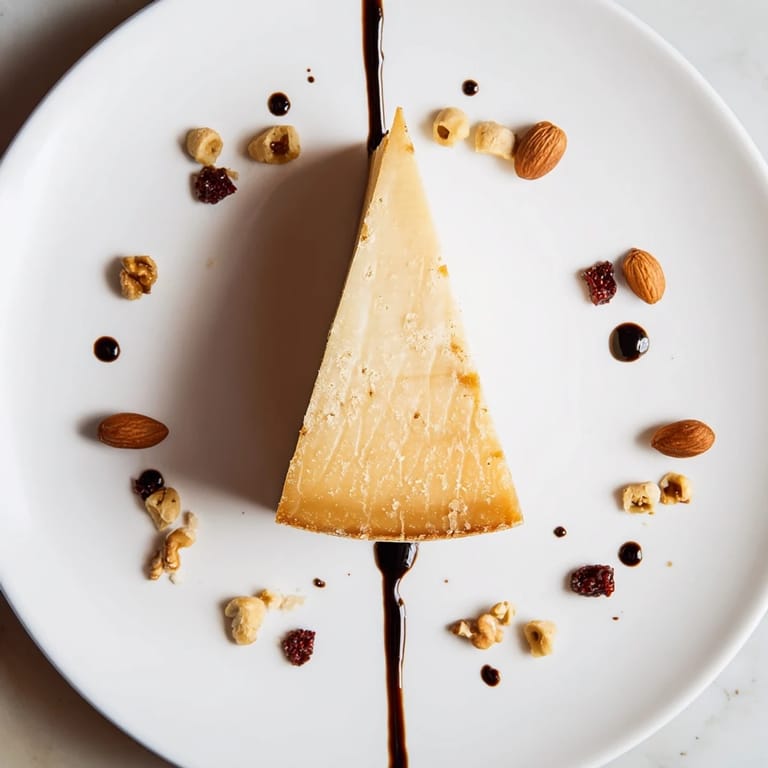
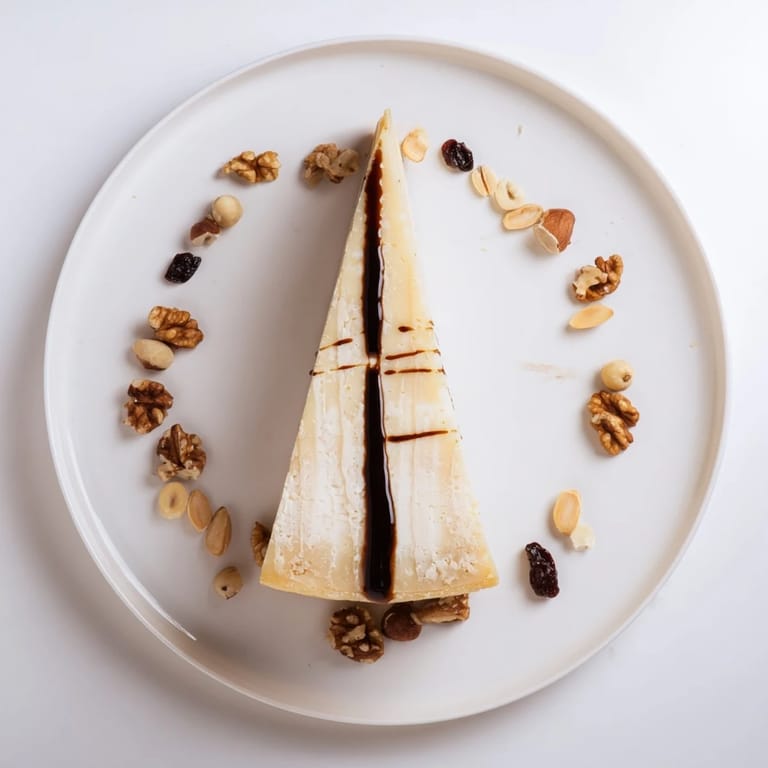
- Place your hard cheese wedge upright in the center with the pointed end facing outward, like the gnomon of an actual sundial. It should feel intentional, not accidental.
- Create the shadow:
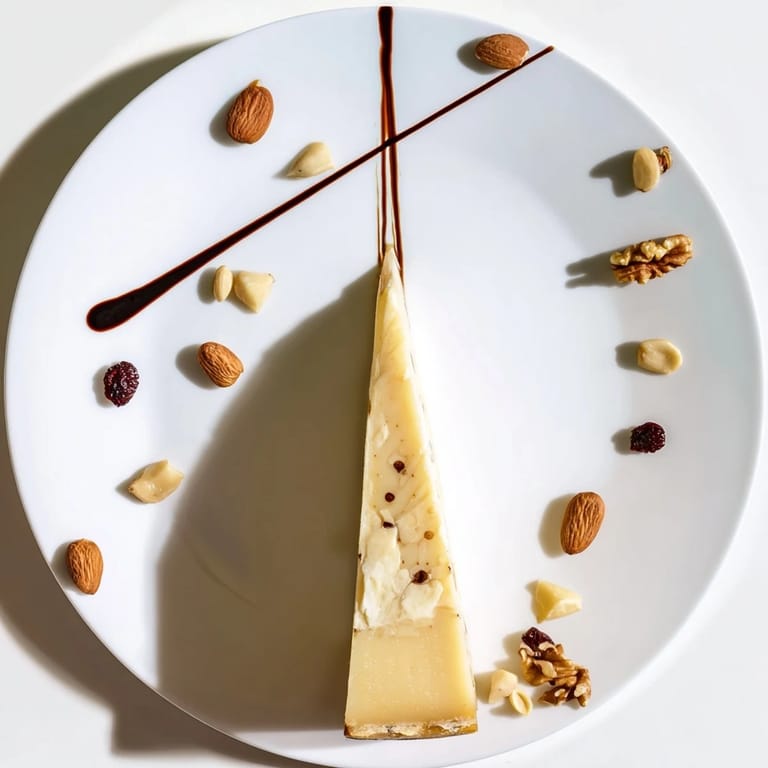
- With a small spoon, carefully drizzle a thick line of balsamic glaze extending outward from the cheese wedge like a shadow being cast. Take your time here—wobbly shadows are charming, but clean ones are dramatic.
- Mark the hours:
- Arrange twelve small clusters of mixed nuts evenly around the cheese in a circle, spacing them like numbers on a clock face. I usually mix varieties within each cluster so every bite offers something different.
- Add the finishing touches:
- Tuck dried cranberries between some nut clusters for color, scatter grapes or figs in the spaces, and add a whisper of edible flowers or microgreens if you want that extra moment of beauty.
- Serve with intention:
- Place cocktail picks or small forks around the platter so guests know how to engage with it without feeling confused.
 Save
Save One afternoon, I realized I'd arranged this platter for a friend who was going through a rough time, and watching her face light up when she saw it reminded me that feeding people is about more than calories. The act of making something this intentional communicates care in a way words sometimes can't.
The Art of Assembly
Think of this as creating a small world on a platter, where each element has a purpose beyond taste. The symmetry of the sundial draws the eye inward, the balsamic shadow creates drama, and the nut clusters give structure. I've found that imperfect placement actually feels more inviting than military precision—a few nuts slightly off-center make the whole thing look less fussy and more genuine, like someone's actually going to enjoy eating this and not just photograph it.
Flavor Pairing Strategy
The beauty of mixing four different nuts is that you're creating a texture and flavor spectrum with every bite—from almonds' mild crunch to hazelnuts' subtle sweetness to walnuts' earthiness to pecans' buttery softness. Pair this with a dry white wine like Pinot Grigio or a light Italian red like Chianti, and suddenly every flavor note becomes more vivid. The balsamic glaze acts as a bridge between the cheese's umami and the nuts' richness, creating harmony instead of competition.
Beyond the Basic Arrangement
Once you nail the classic sundial, you can play with variations depending on what's in your pantry or what season you're cooking in. In summer, I add fresh berries and herbs; in winter, dried fruits and spiced nuts feel more appropriate. The core concept stays the same, but the execution becomes personal.
- Try spiced roasted nuts for extra depth, or mix in candied nuts for sweetness variation.
- A small spoon of fig jam or honeycomb tucked beside the cheese adds another flavor dimension.
- Remember that this platter doesn't need to be made more complicated to be impressive—simplicity arranged with intention is always the answer.
 Save
Save This platter proves that the most memorable meals aren't always the most complicated ones. Sometimes they're the ones that show someone took time to think about beauty alongside taste.
Recipe FAQs
- → What type of cheese works best for the sundial effect?
Aged hard cheeses like Parmigiano-Reggiano, aged Gouda, or Manchego are ideal because they hold shape well and have rich flavors.
- → Can I substitute the nuts with other varieties?
Yes, you can use roasted or spiced nuts to vary flavors and textures, as long as they hold shape to form clusters.
- → What is the purpose of the balsamic glaze?
The balsamic glaze is drizzled to create a shadow effect mimicking a sundial's gnomon, adding both visual appeal and a tangy-sweet contrast.
- → Are there any suggested garnishes to enhance the presentation?
Fresh grapes, figs, edible flowers, or microgreens add natural color and elegance to the platter.
- → How should this platter be served for best enjoyment?
Serve with cocktail picks or small forks for easy sharing during social gatherings or as an impressive appetizer.