 Save
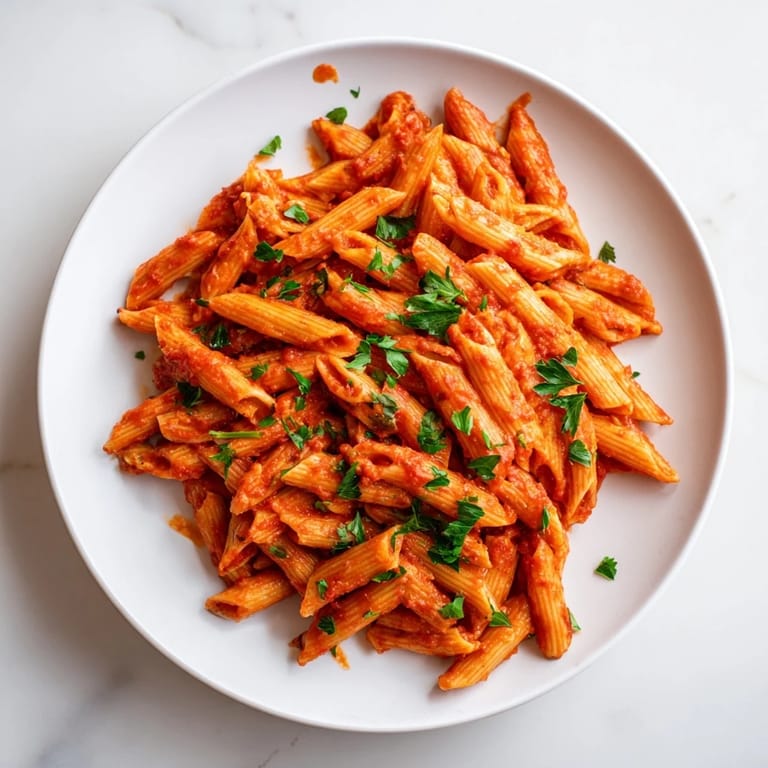
Save There's something about the Roman heat in July that makes you crave penne all'Arrabbiata—I discovered this dish quite by accident one evening when my neighbor, Maria, stopped by with a bag of tomatoes from her garden and that unmistakable intensity in her eyes that said she wasn't leaving until we cooked together. She taught me that real Arrabbiata doesn't need cream or cheese, just the courage to let garlic and chili do their thing. The sauce comes together faster than you'd expect, and somehow tastes like it's been simmering for hours.
I remember making this for a small dinner party on a Tuesday night, worried the dish seemed too simple for guests who expected something fancier. One friend took a bite and just closed her eyes—no words needed. That's when I understood that bold flavor and restraint don't contradict each other; they're partners.
Ingredients
- Penne rigate: The ridges catch sauce in ways smooth pasta can't, so don't skip the ridged version even if it costs a few cents more.
- Extra virgin olive oil: This is where money matters—cheap oil tastes thin and hollow compared to something with actual depth.
- Garlic cloves: Slice them thin so they soften into the oil rather than turn hard and bitter; thickness is the difference between silky and harsh.
- Red chili flakes: Start with 1 teaspoon unless you know your tolerance; you can always add more at the table, but you can't take it back.
- Peeled whole tomatoes: Canned is better than fresh here because the tomatoes are picked at peak ripeness and the acidity is stable.
- Sea salt and black pepper: Grind the pepper fresh—it wakes up the sauce in a way pre-ground pepper never does.
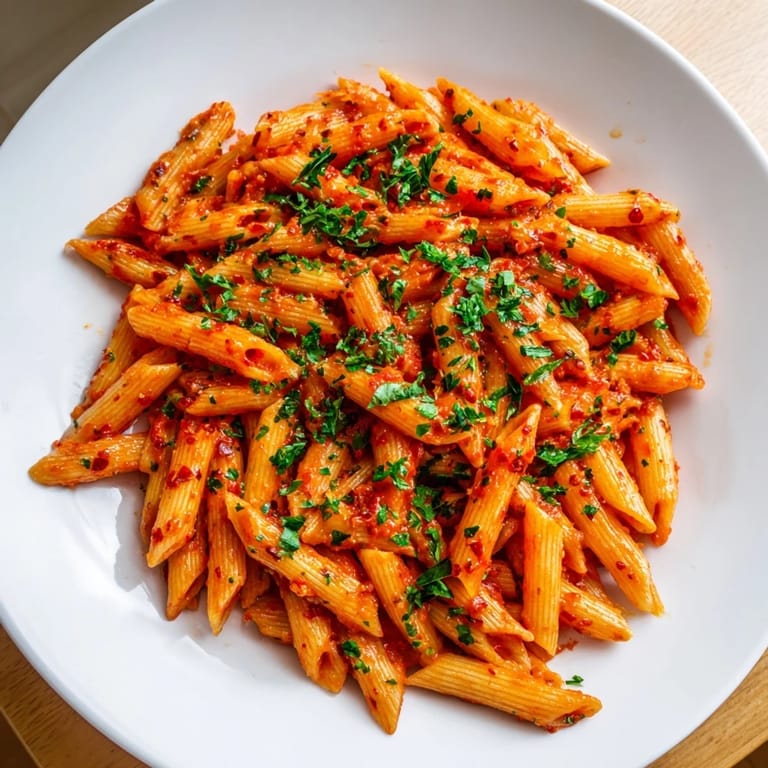
- Fresh flat-leaf parsley: Don't skip this; it's the only green thing in the dish and it cuts through the richness with a clean snap.
Tired of Takeout? 🥡
Get 10 meals you can make faster than delivery arrives. Seriously.
One email. No spam. Unsubscribe anytime.
Instructions
- Start the pasta:
- Bring salted water to a rolling boil—the kind where it doesn't settle when you look away. Salt it like the sea so the pasta tastes of something from the start, not bland water.
- Build the sauce base:
- Heat oil over medium until it shimmers just slightly, then add garlic and chili. This is when your kitchen smells like magic; the moment the aroma hits, you're about a minute away from perfect timing.
- Simmer the tomatoes:
- Crush the tomatoes by hand as they go in—they break down faster and feel more alive than if you add them whole. Let them bubble gently, not violently, for 12 to 15 minutes until the sauce thickens and deepens in color.
- Marry pasta and sauce:
- Drain the pasta but save that starchy water like it's liquid gold; it's the key to making the sauce coat every piece instead of clumping at the bottom. Toss gently and add water a splash at a time until it moves like silk.
- Finish and serve:
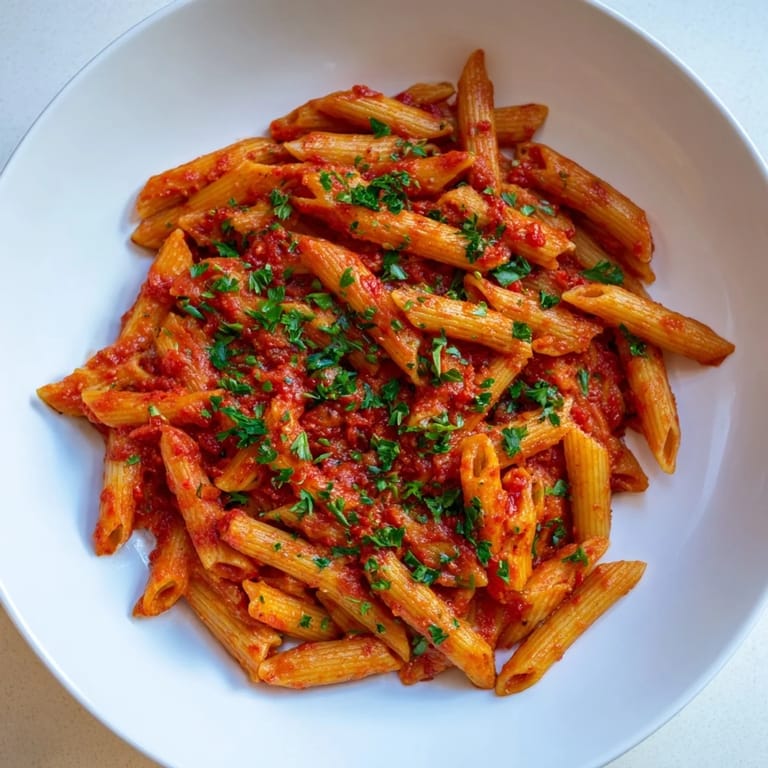
- Turn off heat, stir in parsley, and let it sit for 30 seconds so the herb doesn't bruise. Serve immediately, drizzled with a small amount of your best oil.
 Save
Save Years later, that Tuesday dinner taught me that the best meals often come from not overthinking—just good ingredients treated with respect. This dish proves you don't need a long list or complicated techniques to feed people something they'll remember.
The Simplicity That Challenges
Arrabbiata is a lesson in restraint, and that's exactly why it intimidates some cooks. When there's nowhere to hide, every choice becomes important—which olive oil, how thin the garlic, when to stop stirring the sauce. It forces you to pay attention in the way cooking used to ask before we started hiding behind cream and cheese and complexity.
Heat and Flavor Balance
The spice in this dish isn't about pain; it's about awakening. The chili flakes blur into the tomato and oil, creating a warmth rather than a burn, and the heat actually opens up the sweetness of the tomatoes instead of crushing it. If you find yourself reaching for water mid-bite, you've added too much—dial it back next time and trust that even mild Arrabbiata tastes sophisticated.
Timing, Temperature, and Respect
This is a dish that rewards precision without demanding perfection. The 30-minute timeline is real, but it requires you to have everything prepped before you start cooking—garlic sliced, parsley chopped, pasta water mentally set aside. Rome wasn't built in a day, but this dinner comes together in one.
- Keep your heat at medium; high heat scrambles the garlic and makes the sauce taste sharp instead of rounded.
- Taste as you go and remember that salt brings out flavor and chili brings out heat, but time and gentleness bring out everything else.
- Never rush the simmering phase—those 12 to 15 minutes are when the sauce becomes something greater than its parts.
 Save
Save Penne all'Arrabbiata is proof that you don't need much to make something extraordinary. Serve it with a good wine and let the simplicity speak for itself.
Recipe FAQs
- → How do I adjust the spiciness?
Reduce or increase the amount of red chili flakes during sautéing to control the heat level to your liking.
- → What’s the best pasta to use?
Penne rigate is preferred as its ridges help hold the rich tomato sauce, but other short pasta shapes work well too.
- → Can I prepare the sauce in advance?
Yes, the sauce can be simmered ahead and refrigerated for up to two days. Reheat gently before combining with pasta.
- → How to make the sauce thicker?
Simmer the sauce uncovered for longer while stirring occasionally to allow moisture to evaporate and thicken it.
- → What garnishes complement this dish?
Fresh flat-leaf parsley adds color and freshness. A drizzle of extra virgin olive oil enhances richness and aroma.
- → Can this dish be made gluten-free?
Use gluten-free penne pasta to maintain similar texture and compatibility with the sauce’s flavors.