 Save
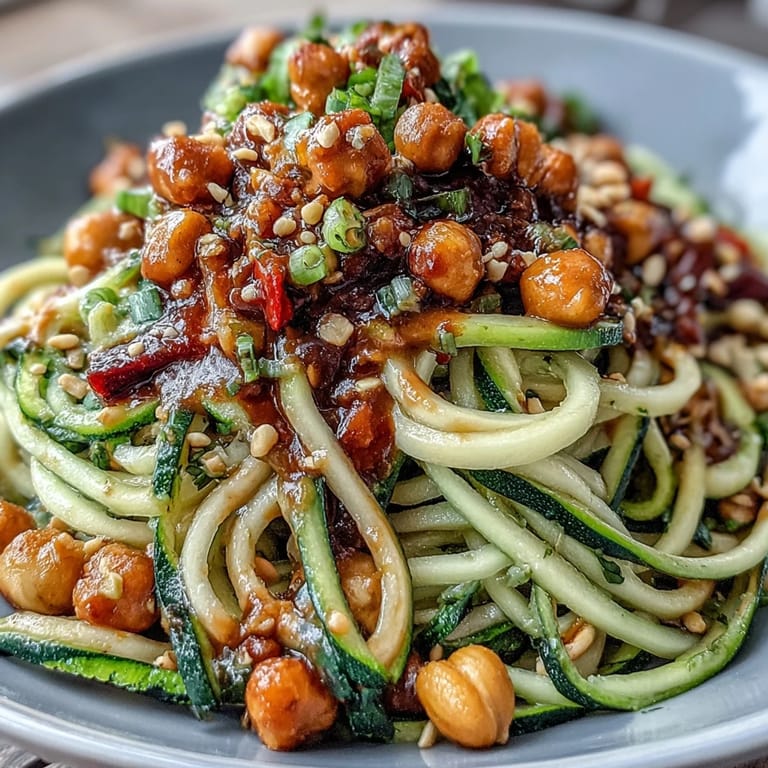
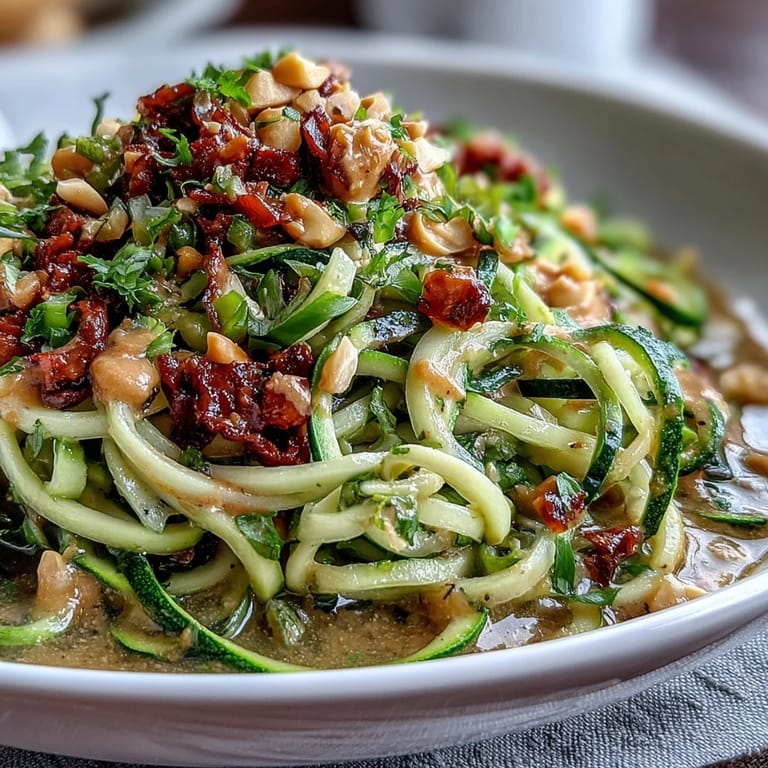
Save My sister called me on a Tuesday afternoon, frustrated about her lunch routine, and I found myself spiralizing zucchini at her kitchen counter while she laughed at how earnest I was being about vegetables. The result—this peanut sauce-coated noodle situation—became something we both craved within days, and now it's the dish I make when I want something that feels light but actually satisfies, without any of the guilt or the kitchen drama.
I made this for a potluck once, skeptical that anyone would touch the vegetable-based dish, and watched three people go back for seconds while the conventional pasta sat ignored in the corner. That moment shifted something for me—I stopped apologizing for cooking with vegetables and started celebrating how good they could taste.
Ingredients
- Zucchinis, spiralized: Four medium ones give you about 6 cups of tender noodles that cook in moments, but the secret is buying firm zucchini that hasn't been sitting in your crisper drawer for weeks.
- Red bell pepper: Slice it thin so it softens just enough to be sweet and slightly yielding without losing its snap.
- Carrot: Julienne it the same size as your zucchini noodles so everything feels cohesive on the fork.
- Snap peas: These keep their crisp texture even after stir-frying, which is exactly why they belong here.
- Green onions: Use the white and light green parts in the cooking, save the dark green tops for garnish where they matter more.
- Natural peanut butter: The kind without added oils or sugar makes a sauce that tastes like peanuts, not like a candy bar melted into your dinner.
- Soy sauce or tamari: Go low-sodium because the sauce concentrates as it cooks, and you want control over the salt.
- Rice vinegar: This mild acid brightens the whole dish without shouting the way some vinegars do.
- Lime juice: Fresh lime matters here; bottled lime juice tastes tinny and wrong by comparison.
- Maple syrup or honey: A tablespoon is all you need to balance the salt and acid with something rounded and warm.
- Toasted sesame oil: The toasted version has actual flavor, unlike the neutral kind, and a little goes such a long way.
- Garlic and ginger: Both should be fresh and added raw to the sauce so they taste vibrant and sharp.
- Crushed red pepper flakes: Optional, but they add a gentle heat that makes your mouth wake up.
Tired of Takeout? 🥡
Get 10 meals you can make faster than delivery arrives. Seriously.
One email. No spam. Unsubscribe anytime.
Instructions
- Prep everything first:
- Spiralize your zucchini and carrot, slice your bell pepper thin, halve your snap peas, and chop your green onions. Having everything ready means your stir-fry stays in constant motion and nothing overcooks.
- Build your peanut sauce:
- Whisk together the peanut butter, soy sauce, rice vinegar, lime juice, maple syrup, sesame oil, garlic, and ginger in a bowl, then add warm water slowly until the sauce flows like thick cream. Taste it—this is your moment to adjust the balance before it hits the heat.
- Heat your pan properly:
- Get your skillet or wok genuinely hot over medium-high heat, then add a splash of sesame oil if you want, which deepens the whole experience. The pan should sizzle when vegetables touch it.
- Cook the sturdy vegetables first:
- Toss in your bell pepper, carrot, and snap peas, stirring constantly for 2 to 3 minutes until they soften just slightly but still have resistance when you bite them. You're looking for that moment between raw and cooked where texture is everything.
- Add zucchini noodles gently:
- Toss your spiralized zucchini in with gentle movements for 2 to 3 minutes, just until it's warm and slightly softened but still maintains its shape. The zucchini releases water as it cooks, so resist the urge to keep stirring or you'll end up with mush.
- Marry everything with sauce:
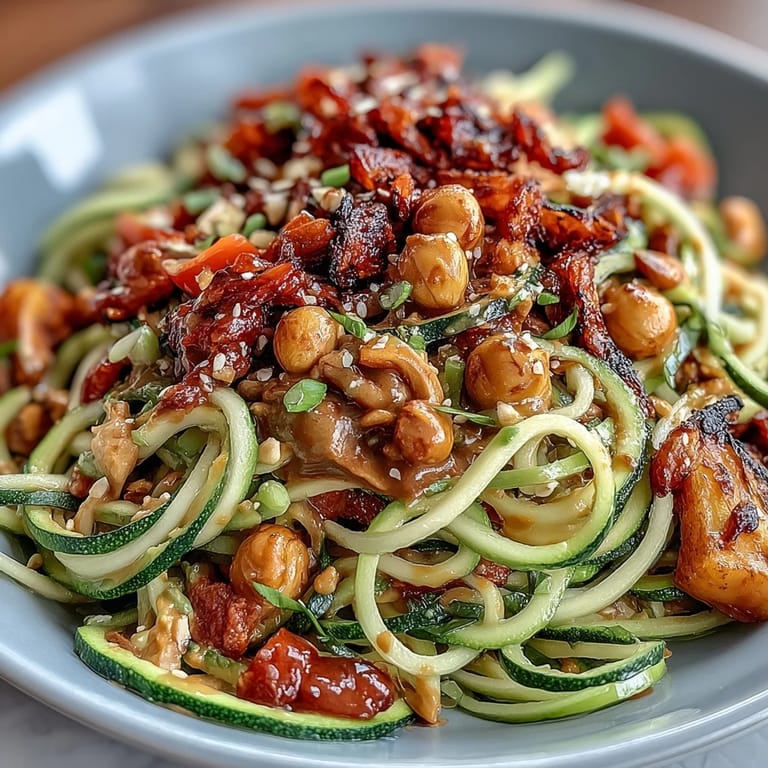
- Pour your peanut sauce over the vegetables and toss everything together for another minute or so until the sauce coats every strand and vegetable piece. Cook just long enough for everything to be warm together, then stop.
- Serve right away:
- Plate immediately, top with chopped peanuts, sliced green onions, and fresh cilantro if you have it. Zucchini noodles continue releasing water even off heat, so timing matters here.
 Save
Save I realized once while eating this alone on my porch that food becomes memorable not because it's fancy, but because it makes you feel taken care of—even by yourself. That's what this dish does every single time.
Making the Sauce Work for You
The peanut sauce is really the heart of this whole situation, and understanding how to balance it makes every bowl better. If your sauce tastes one-dimensional, it usually means you need acid, so squeeze more lime juice or add another splash of rice vinegar. If it's too intense, water it down further. If it tastes flat, a tiny pinch more sesame oil brings everything into focus.
Texture Is Everything
The contrast between the tender zucchini noodles and the slightly crisp vegetables and crunchy peanuts is what makes your mouth actually want to keep eating. If you cook everything until it's soft, you've lost the appeal entirely. The goal is a medley where different things feel different when you bite them, creating this interesting rhythm as you eat.
Variations and Add-Ons
This recipe is flexible in ways that make it feel less like a rule and more like a foundation you can build from. Mushrooms add earthiness, broccoli adds substance, and grilled tofu or chicken turns it into something more protein-forward if you need it that way. The sauce works with all of it because peanut is one of those flavors that plays well with almost everything.
- Poach an egg on top and break the yolk into the warm noodles for richness and protein without heaviness.
- Swap the sesame oil for chile oil if you want heat that's more about intensity than gentle warmth.
- Use almond or cashew butter if you want a different nutty flavor, though the cook time and sauce consistency might shift slightly.
 Save
Save This is the kind of meal that reminds you that eating well doesn't require suffering or spending hours at the stove. Make it, taste the brightness, and feel genuinely nourished.
Recipe FAQs
- → Can I use other vegetables in this stir-fry?
Yes, mushrooms, broccoli, or snap peas can be added to enhance flavor and nutrition. Adjust cooking times accordingly to keep vegetables crisp.
- → How do I prevent zucchini noodles from becoming soggy?
Cook zucchini noodles briefly and add them last to the stir-fry. Avoid overcooking to maintain their texture and prevent excess moisture.
- → What can I substitute for peanut butter if I have allergies?
Sunflower seed butter or almond butter are good alternatives. For soy-free, use coconut aminos instead of soy sauce.
- → Is this dish suitable for gluten-free diets?
Yes, use tamari or gluten-free soy sauce and ensure all ingredients are gluten-free for a safe meal option.
- → Can I add protein to make this more filling?
Grilled tofu, chicken, or shrimp are excellent protein additions that pair well with the peanut sauce and vegetables.