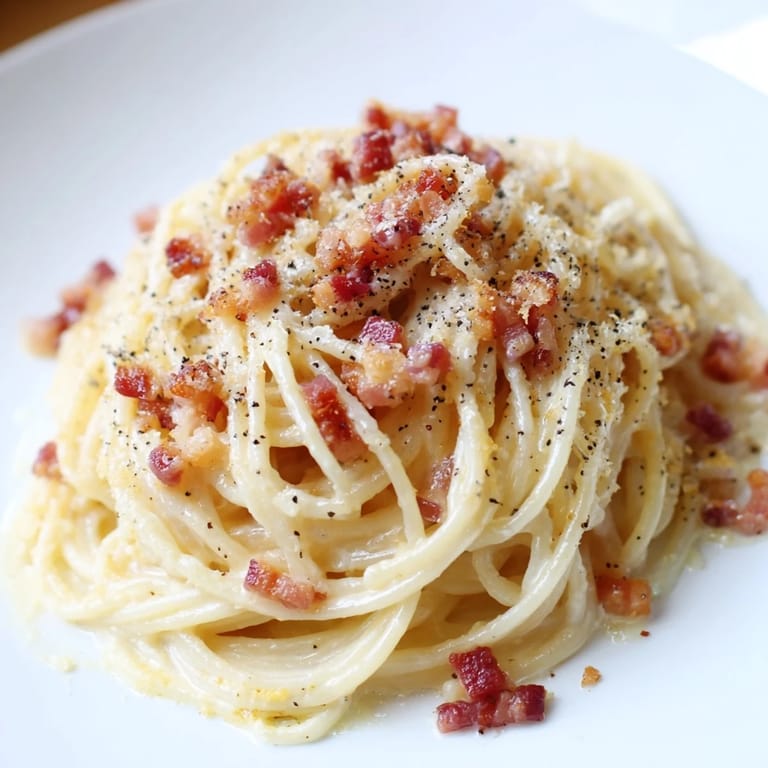
 Save
Save There's a reason carbonara has survived centuries of Roman cooking—it's pure alchemy in a pan. I discovered this during a chaotic Tuesday night when I had exactly twenty minutes to feed two hungry people and nothing in the fridge but eggs, pasta, and bacon. No cream, no fancy ingredients, just the real deal. What emerged was so silky and golden that I stopped mid-bite, realizing I'd been making it wrong my entire life.
The first time I got this right was cooking for someone who grew up in Rome. I was nervous, honestly—hands shaking a little as I tossed the pasta off heat, watching the eggs transform into silk rather than scramble. When they took that first bite and just smiled without saying anything, I knew I'd finally understood what this dish was supposed to be.
Ingredients
- Dried spaghetti: Use 200g for two people—it's the foundation, and al dente texture matters because it'll continue cooking slightly when the hot pasta meets the egg.
- Large eggs: Two whole eggs create that dreamy sauce; room temperature eggs integrate more smoothly into hot pasta.
- Freshly grated Parmesan cheese: 40g (about 1/3 cup) of the good stuff—pre-grated adds anti-caking agents that interfere with silkiness, and this is too quick a dish to compromise.
- Freshly ground black pepper: 1/4 teaspoon goes into the egg mixture, but have more cracked pepper nearby because you'll want extra at the table.
- Bacon or pancetta: 100g diced—pancetta is more traditional, but good bacon works beautifully if that's what's on hand.
- Extra Parmesan and cracked black pepper: For finishing; this is where you can be generous and unapologetic.
Tired of Takeout? 🥡
Get 10 meals you can make faster than delivery arrives. Seriously.
One email. No spam. Unsubscribe anytime.
Instructions
- Get the water boiling:
- Fill a large pot with salted water—it should taste like the sea—and bring it to a rolling boil. This is your base for cooking pasta properly and for the pasta water you'll need later.
- Cook the spaghetti:
- Add dried spaghetti and cook until al dente, usually 1-2 minutes before the package says it's done. Before draining, scoop out 80ml (1/3 cup) of starchy pasta water into a small bowl and set it aside—this is your creamy secret weapon.
- Prepare the egg mixture:
- In a bowl, whisk together two eggs, 40g grated Parmesan, and 1/4 teaspoon black pepper until combined. Don't overthink this; just make sure everything is evenly distributed.
- Crisp the bacon:
- While pasta cooks, dice your bacon and cook it in a large skillet over medium heat until it's golden and crispy, about 3-4 minutes. The rendered fat will be your flavor base, so let it work its magic.
- Combine everything off the heat:
- Turn off the heat completely, then add the drained pasta directly to the skillet with the bacon. Pour the egg mixture over the pasta and toss constantly and vigorously—this is the moment where speed matters. The residual heat cooks the eggs into a sauce rather than scrambling them.
- Loosen with pasta water:
- Add reserved pasta water gradually while tossing, a splash at a time, until the sauce becomes silky and coats every strand. You might not need all of it, or you might need every drop—the starch in the water is what binds everything into cream.
- Serve immediately:
- Plate right away, top with extra Parmesan and cracked black pepper, and eat before it cools and sets up.
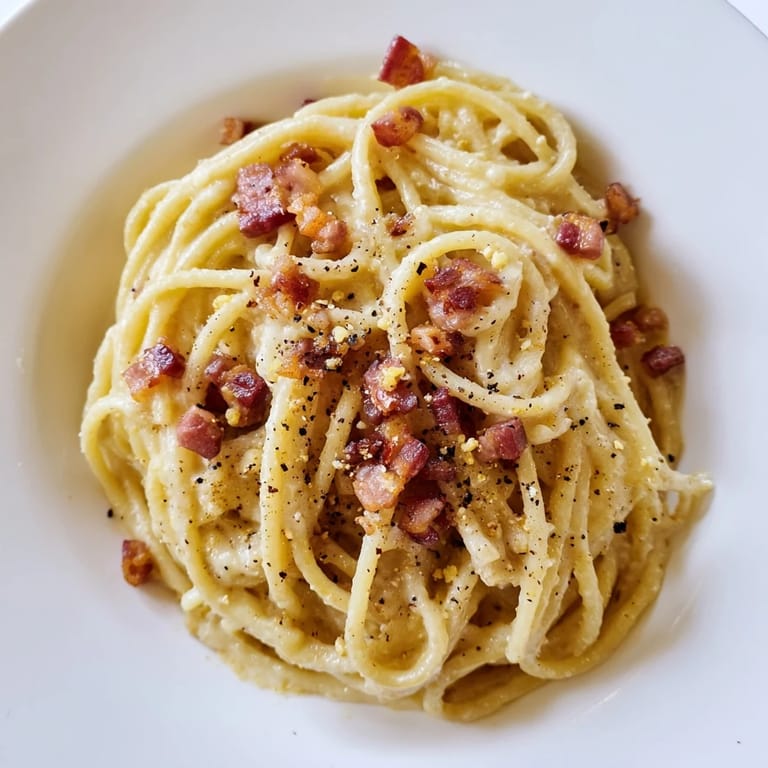 Save
Save I made this for a friend during their kitchen renovation when they were living on takeout and exhaustion. They ate their bowl in about ninety seconds, then looked up with actual gratitude—like I'd handed them back a piece of normal life. That's when carbonara stopped being just a recipe and became something that matters.
The Real Secret to Silky Sauce
The magic of carbonara isn't in rare ingredients or complicated technique—it's in understanding that eggs are already an emulsion waiting to happen. When you temper them with residual heat and toss them constantly, you're creating a suspension that coats the pasta in the most elegant way. The starchy pasta water acts like an invisible hand, helping the eggs and fat come together into something that feels more luxurious than it has any right to be for such a simple dish.
Ingredient Swaps and Variations
Pancetta is the traditional choice in Rome, but guanciale (cured pork jowl) is even more authentic if you can find it and want to elevate this further. If you're working with what's available, quality bacon works beautifully—just avoid the thin-sliced stuff that'll burn. Pecorino Romano can absolutely replace Parmesan for a sharper, more peppery edge that some people prefer; the original Roman recipe actually calls for it, so you're not compromising, just pivoting toward tradition.
Why This Works as a 20-Minute Dinner
There's no sauce to simmer, no prep work that eats up time—just one pot for water, one skillet for bacon, and a bowl for whisking eggs. It's the kind of meal that teaches you cooking doesn't require hours or stress, just understanding the few things that matter. When someone's hungry and you have twenty minutes, this becomes your best friend.
- Have your Parmesan already grated and your black pepper ground or cracked before anything hits heat.
- Read your pasta package so you know exactly how long it needs and can time everything to finish together.
- Remember that it's okay if your sauce looks loose at first—it'll tighten slightly as it cools, so don't panic and keep adding pasta water gradually.
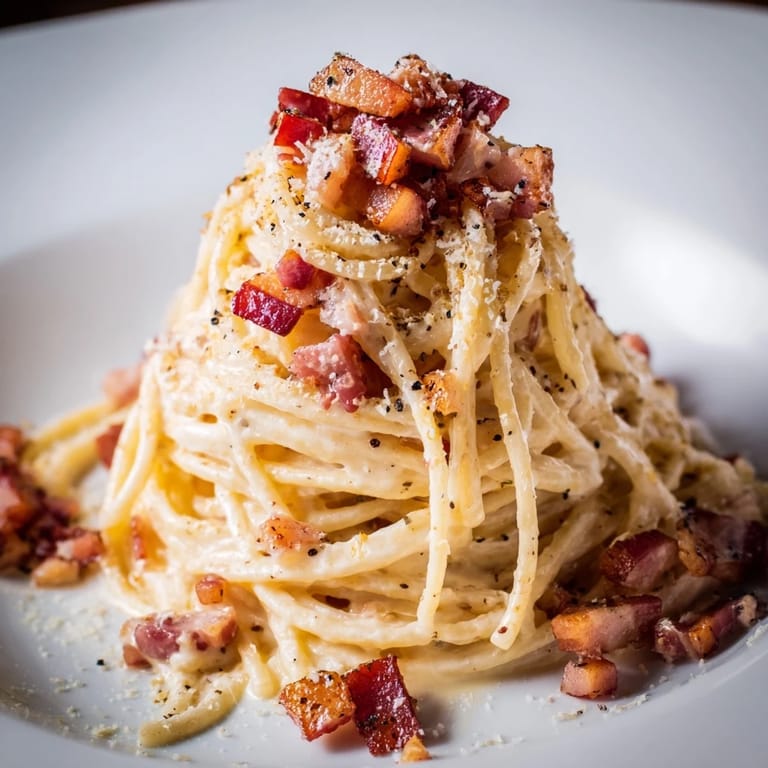 Save
Save This is the dish that proved to me that the simplest recipes often taste the best, and that respecting technique matters more than piling on ingredients. Make it tonight, and you'll understand why Rome has been making it this way for generations.
Recipe FAQs
- → How do you prevent the eggs from scrambling?
Remove the pan from heat before adding the egg mixture and toss quickly. Adding reserved pasta water gradually helps create a silky sauce without scrambling.
- → Can I use pancetta instead of bacon?
Yes, pancetta works well and offers a more authentic, slightly different flavor while maintaining the desired crispiness.
- → Is freshly grated Parmesan necessary?
Freshly grated Parmesan melts better and provides a richer, fresher taste compared to pre-grated cheese.
- → What is the purpose of reserved pasta water?
The starchy pasta water loosens the sauce and helps it coat the spaghetti evenly, creating a creamy texture.
- → Can garlic be added to enhance flavor?
Yes, frying a minced garlic clove with the bacon adds depth, but remember to remove it before combining with pasta to avoid overpowering the dish.