 Save
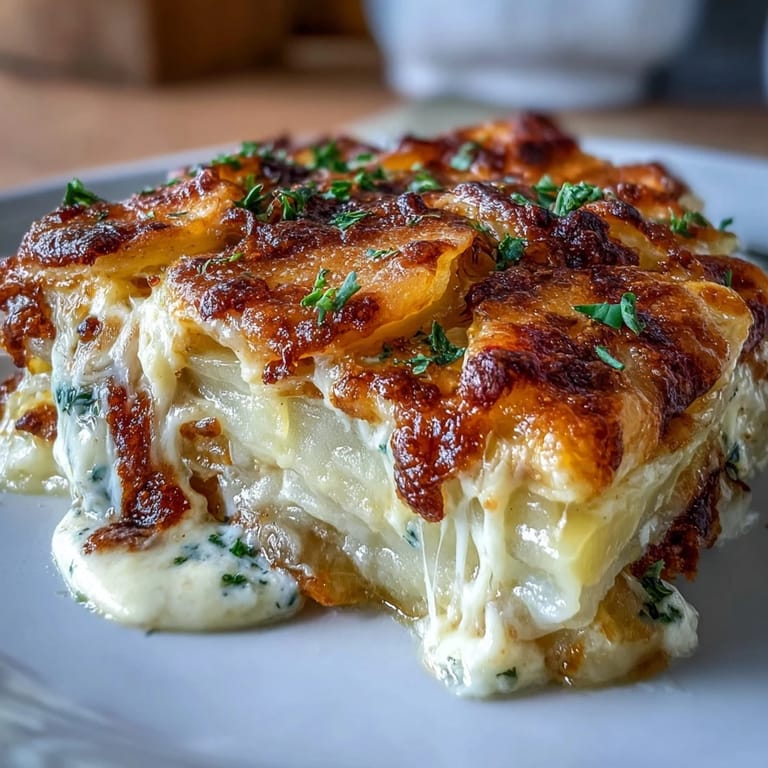
Save My mom used to make scalloped potatoes every Easter, and I'd watch her slice potatoes so thin they were almost translucent, layering them with this silky cheese sauce that smelled like butter and sharp cheddar had a conversation. One year I decided to make them myself, and honestly, I was terrified of messing up the roux—but it turns out, if you just stay calm and whisk, the whole thing comes together like magic. Now whenever I make this dish, that kitchen gets warm and cozy in a way that makes people want to linger at the table.
I made this for a potluck once where everyone brought the same salad—yes, the same salad, accidentally—and these scalloped potatoes became the unexpected star. A neighbor asked for the recipe three times that night, and I realized right then that comfort food has this quiet power to bring people together. Watching someone take that first bite and just close their eyes in satisfaction never gets old.
Ingredients
- Yukon Gold or Russet potatoes: Yukon Golds are creamier and hold their shape better, but Russets work if that's what you have—just slice them evenly so they cook at the same rate.
- Yellow onion: Sliced thin like the potatoes, it sweetens as it bakes and disappears into the dish, adding depth without being obvious.
- Sharp cheddar cheese: Don't use the pre-shredded stuff if you can help it; block cheese melts smoother and tastes sharper.
- Mozzarella cheese: This keeps things creamy and stretchy, balancing the sharpness of the cheddar.
- Whole milk: The fat content matters here; skim milk won't give you that luxurious sauce.
- Unsalted butter and all-purpose flour: This roux is your foundation, so don't rush it or skip the whisking.
- Salt, black pepper, garlic powder, and paprika: Simple seasonings, but the paprika sprinkled on top does more than look pretty—it adds a subtle smokiness.
Tired of Takeout? 🥡
Get 10 meals you can make faster than delivery arrives. Seriously.
One email. No spam. Unsubscribe anytime.
Instructions
- Set the stage:
- Preheat your oven to 375°F and grease that 9x13-inch dish—don't skip this step, or you'll be scraping for days.
- Make your roux:
- Melt butter over medium heat, add flour, and whisk it for a solid minute until it smells a little nutty and golden. This removes the raw flour taste and creates the thickening agent your sauce needs.
- Build the sauce:
- Pour milk in slowly while whisking constantly; this is where patience pays off because rushing creates lumps that no amount of straining will fix. Keep going until it's thick enough to coat the back of a spoon, about 3 to 4 minutes.
- Melt in the cheese:
- Off the heat, stir in your seasonings and half the cheese blend until everything's smooth and glossy. The heat from the sauce will melt the cheese perfectly without making it grainy.
- Layer like you mean it:
- Half the potatoes go down first, then half the onions, then half the sauce—repeat the whole thing again. This even distribution is what makes every bite taste the same.
- Top and cover:
- Scatter the remaining cheeses and paprika over the top, cover tightly with foil, and slide it into the oven.
- Bake in two stages:
- Bake covered for 40 minutes to let the potatoes soften, then remove foil and bake 25 to 30 minutes more until the top turns golden and crispy and the potatoes are fork-tender. You'll know it's done when it smells like a cheesy dream.
- Rest and serve:
- Let it sit for 10 minutes after coming out of the oven; this helps it set just enough to scoop cleanly without being cold.
 Save
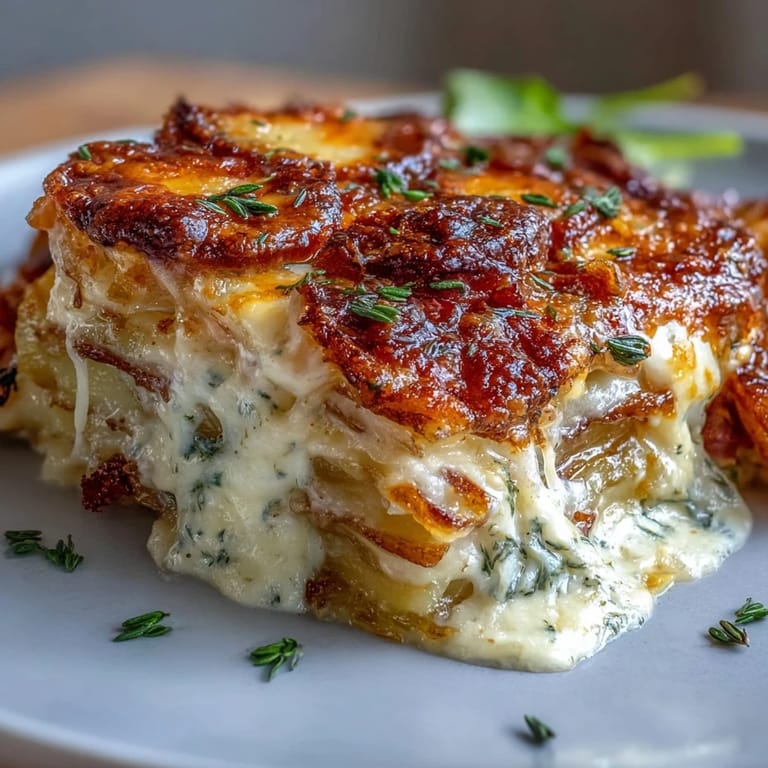
Save There was a winter night when my partner came home stressed from work, and I had these warming in the oven. The smell alone changed their entire mood before they even sat down. That's when I understood that some dishes do more than feed you—they remind you that someone cared enough to spend time in the kitchen for you.
Flavor Variations That Actually Work
I've experimented with adding a whisper of nutmeg to the sauce—just an eighth of a teaspoon—and it adds this mysterious warmth that people can't quite place. Fresh thyme or chives scattered before serving add brightness, and if you're feeling bold, a small handful of crispy bacon crumbled on top right before serving transforms it into something even more special.
Cheese Selection Matters More Than You'd Think
Sharp cheddar gives you tang and boldness, mozzarella keeps it creamy, but I've also tried Gruyère when I wanted something richer and more sophisticated. Emmental works beautifully too, and once I even used a mix of Emmental and white cheddar for a slightly sweeter profile. The key is avoiding anything too processed or pre-shredded, because anti-caking agents prevent smooth melting.
Making It Ahead and Other Practical Wisdom
You can assemble this entire dish hours before baking—I often make it in the morning and bake it right before dinner. The cold time actually helps the potatoes absorb some of the sauce flavors, so it might even taste better. Just add about 10 minutes to the baking time if it's coming straight from the fridge.
- Store leftovers covered in the fridge for up to 4 days, and they reheat beautifully with just a splash of milk stirred in.
- This freezes well before baking; thaw overnight in the fridge, then bake as directed with maybe 5 extra minutes.
- A mandoline saves your fingertips and gets potato slices perfectly even, though a sharp knife and patience work just as well.
 Save
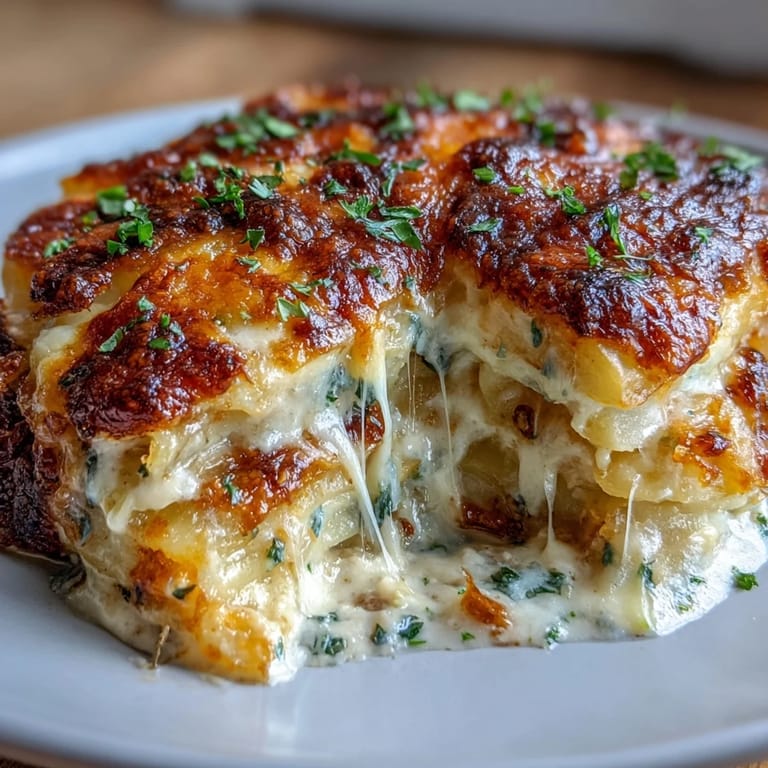
Save This recipe is proof that the simplest things done well become the things people remember. Make it whenever someone needs comfort, whenever the table needs something golden and warm.
Recipe FAQs
- → What type of potatoes work best?
Yukon Gold or Russet potatoes are ideal because they hold their shape and provide a creamy texture when baked.
- → Can I substitute the cheeses used?
Yes, Gruyère or other semi-hard cheeses can replace cheddar for a deeper, nutty flavor.
- → How do I avoid lumps in the sauce?
Whisk the butter and flour roux continuously before slowly adding milk, ensuring a smooth mixture without lumps.
- → Is it possible to prepare this ahead of time?
The dish can be assembled several hours before baking and kept refrigerated until ready to bake.
- → How can I make this dish gluten-free?
Substitute all-purpose flour with a gluten-free alternative and verify all ingredient labels to avoid gluten contamination.
- → What temperature and time should I bake it?
Bake covered at 375°F (190°C) for 40 minutes, then uncovered for an additional 25-30 minutes until tender and golden.