 Save
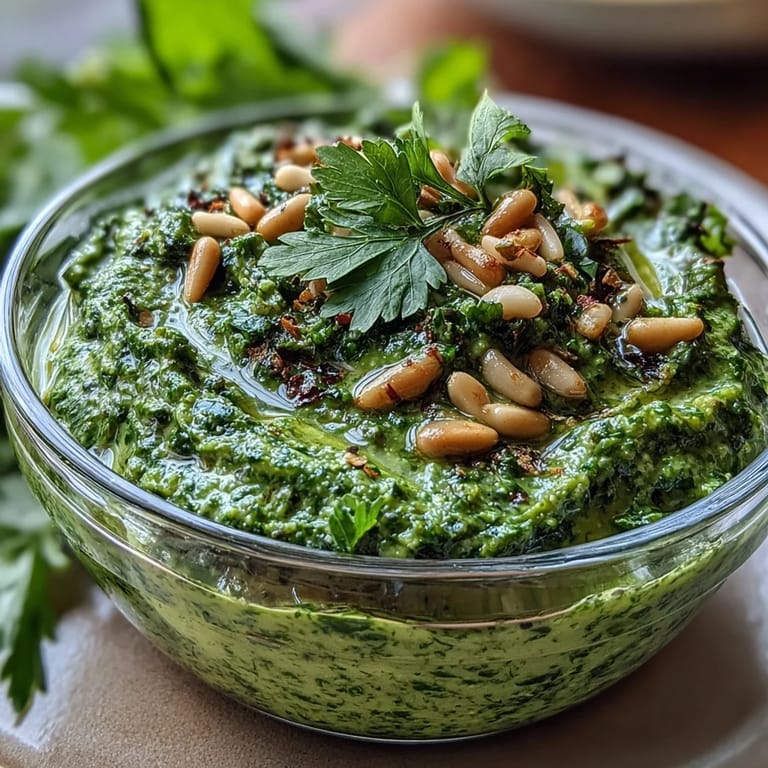
Save My neighbor's yard was overrun with dandelions one spring, and instead of cursing the weeds, she invited me over to harvest them for pesto. I'd never considered dandelion greens as anything but a nuisance, but that afternoon, standing in her garden with scissors in hand, something clicked. The bitterness I'd tasted once in a salad transformed into something elegant when blended with garlic, pine nuts, and good olive oil. Now whenever I see those yellow flowers going to seed, I think of that conversation and reach for the basket.
I made this for a dinner party last summer, and watching people taste it was pure joy. One guest kept asking what gave it that complex, almost mineral quality—she couldn't believe it was dandelions. By the end of the night, I was writing down the recipe on the back of her business card while she jotted down the names of local farms where she could buy the greens. That small moment turned into her planting dandelions intentionally the following spring.
Ingredients
- Fresh dandelion greens: The heart of this pesto—look for younger, tender leaves if bitterness concerns you, and wash them thoroughly since they grow close to soil.
- Fresh basil: A gentle counterbalance if you're new to dandelion's assertive flavor, though it's completely optional once you fall in love with the greens alone.
- Pine nuts, toasted: Toast them yourself rather than buying pre-toasted; the aroma filling your kitchen is half the pleasure, and they taste fresher.
- Parmesan cheese: Freshly grated makes all the difference—pre-grated versions contain anti-caking agents that muddy the texture and flavor.
- Garlic cloves: Two large cloves give backbone without overwhelming, but taste as you go because garlic can turn aggressive in a food processor.
- Extra-virgin olive oil: Don't waste a premium bottle here, but don't use the cheap stuff either; this ingredient deserves respect.
- Lemon juice: Brightens everything and mellows the bitterness if needed, so squeeze it fresh and adjust to your preference.
- Kosher salt and black pepper: The seasoning framework that lets everything else shine.
Tired of Takeout? 🥡
Get 10 meals you can make faster than delivery arrives. Seriously.
One email. No spam. Unsubscribe anytime.
Instructions
- Toast the pine nuts until golden:
- Dry heat in a skillet for about two to three minutes, stirring constantly so they don't burn—you'll smell when they're ready, a nutty perfume that suddenly intensifies. Let them cool on a plate while you prep everything else.
- Combine the base flavors:
- Pulse dandelion greens, basil if using, garlic, cooled pine nuts, and Parmesan in a food processor until finely chopped but not yet smooth. This is where you're building texture and making sure the garlic doesn't dominate any single bite.
- Stream in the oil and lemon:
- With the processor running, pour the olive oil slowly and let the lemon juice follow, blending until creamy and cohesive. Pause to scrape down the sides so nothing hides at the bottom.
- Season and taste:
- Add salt and pepper, pulse briefly, then taste—this is crucial because every batch of greens has its own personality. Adjust lemon juice for brightness or salt for depth.
- Store with intention:
- Transfer to a clean jar and press plastic wrap directly onto the surface if keeping it longer than a day; this prevents oxidation and keeps the color vivid.
 Save
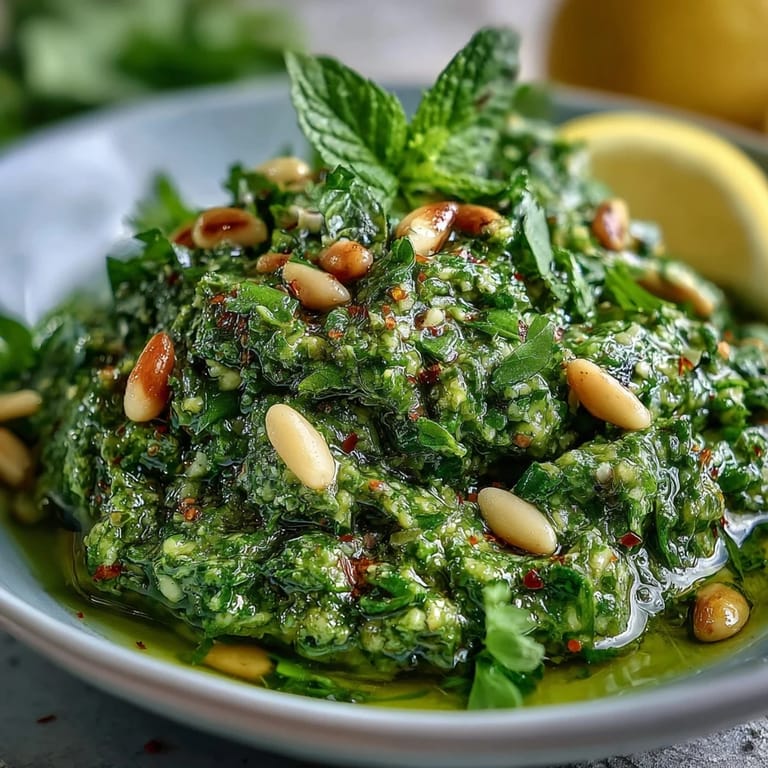
Save One quiet evening, I made this pesto while my daughter did homework at the kitchen table, and the smell drifting over made her look up and ask what smelled like 'fancy and a little bit like dirt in a good way.' We laughed, but she wasn't wrong—there's something earthy and intentional about this sauce that reminds you it came from the ground, not a factory.
The Bitter Greens Advantage
Dandelion greens contain compounds that actually aid digestion and support liver health, so this pesto is doing something good for your body while delighting your palate. The bitterness isn't a flaw to mask; it's a feature that makes your taste buds wake up. When you pair it with rich pasta or creamy cheese, that slight bitterness becomes a sophistication your guests will notice even if they can't name it.
Where to Find Dandelions (And Why You Should Care)
Check farmers markets in spring and early summer, or if you have access to a yard or garden space, let a patch grow intentionally and harvest before the flowers go to seed. Many people also grow them specifically in containers so they stay tender. The thrill of harvesting your own ingredient adds a layer of satisfaction that store-bought ingredients, no matter how good, just can't match.
Creative Uses That Surprised Me
Beyond the obvious pasta application, this pesto has become my secret weapon for elevating simple meals into something memorable. Swirl it into cream cheese on toast, spoon it over roasted beets, mix it into mayonnaise for sandwiches, or thin it slightly with extra olive oil for a salad dressing that makes lettuces taste twice as interesting. Once you have a jar in your refrigerator, you'll find yourself reaching for it at moments you didn't expect.
- A small dollop stirred into scrambled eggs or omelets transforms breakfast into something restaurant-worthy.
- Drizzle it over grilled chicken or fish just before serving for a burst of brightness that makes people ask for seconds.
- Keep a spoon nearby because you'll absolutely eat some straight from the jar, and that's not a failure of self-control, that's a victory.
 Save
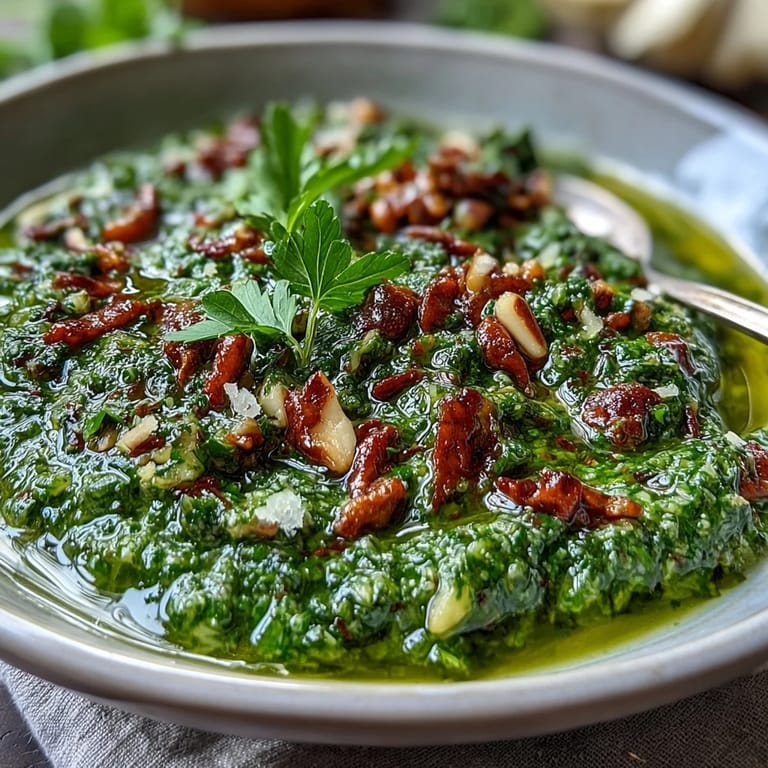
Save This pesto represents something I've come to love about cooking: the willingness to look at what everyone else dismisses and see possibility instead. Every time you make it, you're choosing to slow down and taste something wild and real.