 Save
Save Saturday mornings used to mean standing in a long café line, watching someone else drizzle honey over golden toast. Then one quiet weekend, I found myself with brioche, Greek yogurt, and an egg, wondering if I could capture that same magic at home without leaving my kitchen. What emerged was this custard toast—thick slices cradling a creamy, baked center that's somehow both comforting and indulgent. It became my answer to those mornings when I wanted something special but didn't want to complicate the day.
I made this for a friend who'd been stressed about work, and watching her face light up when she bit into it reminded me that simple, warm food can be exactly what someone needs in that moment. She ate slowly, like she was actually tasting it instead of rushing through breakfast, and asked for the recipe before she even finished.
Ingredients
- Brioche or challah bread (2 thick slices, about 1-inch): The richness matters here—these breads absorb the custard beautifully without turning soggy, and their slight sweetness echoes the honey in the filling.
- Large egg: One is enough; it creates the foundation of the custard without making it heavy.
- Plain Greek yogurt (3 tbsp): This is my secret to keeping the custard creamy rather than rubbery—the tang balances the sweetness, and it adds protein without any dairy heaviness.
- Honey or maple syrup (1½ tbsp): Choose whichever one you'd want to drizzle on top; that's your flavor direction.
- Vanilla extract (½ tsp): A small amount that whispers rather than shouts, tying all the flavors together.
- Salt (pinch): This tiny bit is crucial—it brightens the sweetness and prevents the custard from tasting one-dimensional.
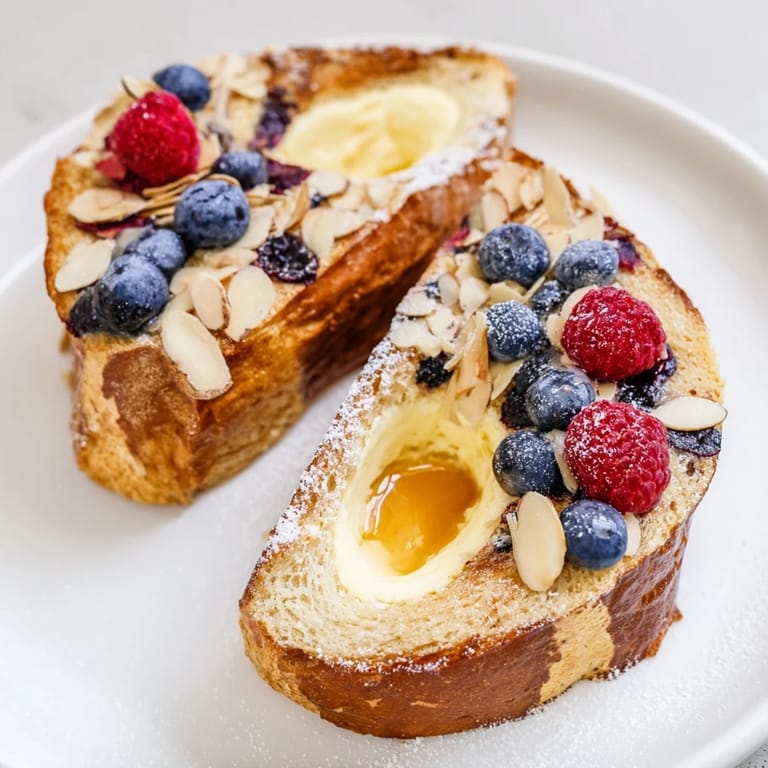
- Fresh berries, nuts, powdered sugar, extra honey (optional toppings): These are your canvas; use whatever feels right or what you actually have on hand.
Tired of Takeout? 🥡
Get 10 meals you can make faster than delivery arrives. Seriously.
One email. No spam. Unsubscribe anytime.
Instructions
- Warm your oven:
- Set it to 375°F and line a baking sheet with parchment paper while it preheats—this small step prevents sticking and cleanup becomes almost effortless.
- Build the custard:
- Whisk the egg, yogurt, honey, vanilla, and salt together until it's smooth and pale, about 30 seconds. You'll know it's right when there are no streaks of yogurt visible.
- Create the wells:
- Place your bread slices on the sheet and use the back of a spoon to gently press down the center of each, leaving a border so the custard doesn't spill off the sides. Don't push too hard—this is suggestion, not force.
- Fill with care:
- Pour or spoon the custard evenly into those wells, letting it settle into the bread. Watch it sink slightly as the bread absorbs it.
- Add your toppings:
- Scatter berries and nuts over the top if you're using them—they'll warm and slightly soften in the oven, releasing their flavors into the custard.
- Bake to golden:
- Slide into the oven for 12–15 minutes, watching as the edges turn golden and the custard sets from the outside in. You want the center to jiggle just slightly when you gently shake the pan.
- Rest and finish:
- Let it cool for a minute, then dust with powdered sugar if you'd like and drizzle with extra honey. The slight heat will make the honey flow like silk.
 Save
Save There's something about eating warm, custardy bread with your hands that brings you back to childhood, except this version tastes like you actually know what you're doing in the kitchen. That feeling of quiet competence while eating something genuinely delicious is what I keep this recipe for.
Flavor Variations That Work
A pinch of cinnamon in the custard tastes like autumn even in summer, warming everything with nostalgia. Lemon zest adds brightness that cuts through the richness beautifully, especially if you're pairing it with berries. Once I added a tiny splash of bourbon to the custard mixture on a whim, and the subtle warmth made it feel almost decadent.
Why This Recipe Stays in Rotation
Unlike many breakfast recipes that demand precision or special equipment, this one works with what most of us already have and with ingredients we actually eat. It's flexible enough for whatever's in your fridge but intentional enough to feel like a real choice, not just cereal with extra steps.
Make It Your Own
The beauty of this recipe is that it invites adjustment without falling apart—swap the fruit, change the sweetener, add spices, or keep it plain and let the custard be the star. Each version teaches you something about what you actually want for breakfast.
- Gluten-free bread works perfectly and bakes the same way, making this accessible to more tables.
- Dairy-free yogurt and a flax egg keep the custard silky for anyone avoiding animal products.
- Leftover custard toast is decent cold, but it's genuinely meant to be eaten warm, so save leftovers for lunch rather than next-day breakfast.
 Save
Save Custard toast sits in that rare middle ground where it's simple enough for a regular Tuesday but feels special enough to serve someone you want to impress. That's the kind of recipe worth keeping close.
Recipe FAQs
- → What type of bread works best for custard toast?
Thick slices of brioche or challah are ideal due to their soft texture and ability to absorb the custard without falling apart.
- → Can I use alternative sweeteners in the custard?
Yes, you can substitute honey with maple syrup or adjust sweetness to taste with other natural sweeteners.
- → How do I achieve a crisp outside and soft center?
Pressing the bread to create a shallow well helps hold the custard in place while baking at 375°F ensures a golden crust with a tender interior.
- → Are there suitable variations for dietary needs?
Gluten-free bread, dairy-free yogurt, or flax eggs can be used to accommodate gluten or dairy sensitivities.
- → What toppings complement this dish?
Fresh mixed berries, sliced almonds or pistachios, powdered sugar, and a drizzle of honey or maple syrup enhance flavor and texture.