 Save
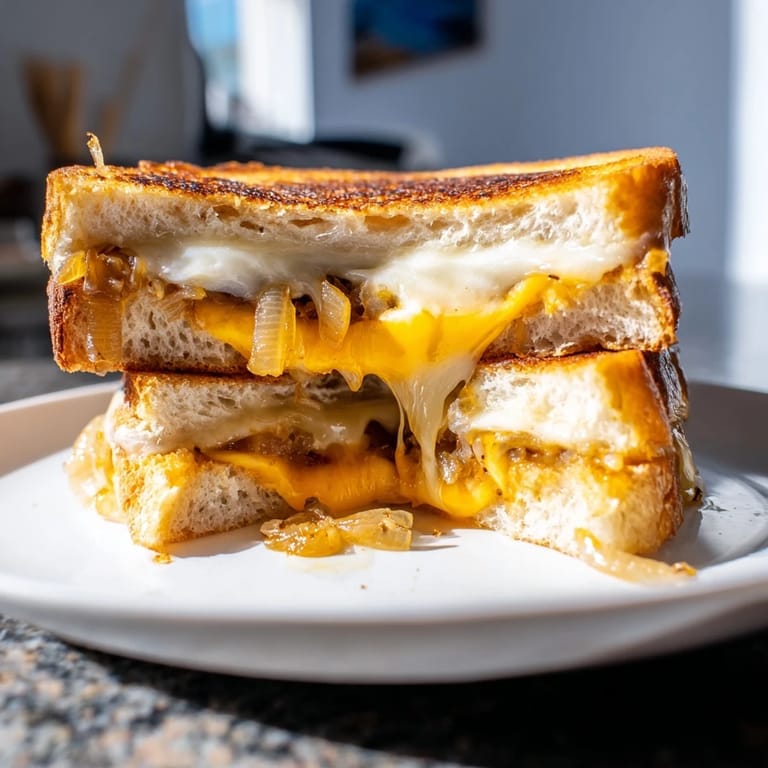
Save My neighbor knocked on my door one rainy Tuesday holding a bag of onions she couldn't use before leaving town. I stood at the stove that evening, watching those slices collapse into something golden and impossibly sweet, and built a grilled cheese around them just to see what would happen. The bread crackled, the cheddar pooled, and I understood why people write poems about simple food. I've made it dozens of times since, tweaking the heat and the timing until it became something I don't even think about anymore. It just happens, and it's always exactly right.
I made this for my brother after he came home from a long shift, too tired to talk. He sat at the counter, ate in silence, then asked if there was another one. That's when I knew it wasn't just good, it was the kind of good that speaks for itself. We didn't need to discuss flavor profiles or technique. He just nodded, and I flipped another sandwich onto the skillet without a word.
Ingredients
- Sourdough or country bread: The slight tang and sturdy crumb hold up to the moisture from the onions without turning soggy, and it crisps beautifully in butter.
- Unsalted butter, softened: Spreading it easily means even browning and no torn bread, plus you control the salt level in the final sandwich.
- Sharp white cheddar cheese, grated: White cheddar melts cleaner than orange and the sharpness keeps the sandwich from feeling too sweet or heavy.
- Yellow onions, thinly sliced: They have the right balance of sugar and bite to caramelize into something deep and complex without turning bitter.
- Olive oil: A little fat to start the onions cooking evenly before they release their own moisture and begin to brown.
- Salt: Draws out the water from the onions early so they cook down faster and develop better color.
- Sugar, optional: A small boost if your onions are taking too long to brown or if you want them a touch sweeter.
- Freshly ground black pepper: Just enough to add a faint warmth and cut through the richness without competing with the onions.
Tired of Takeout? 🥡
Get 10 meals you can make faster than delivery arrives. Seriously.
One email. No spam. Unsubscribe anytime.
Instructions
- Caramelize the onions:
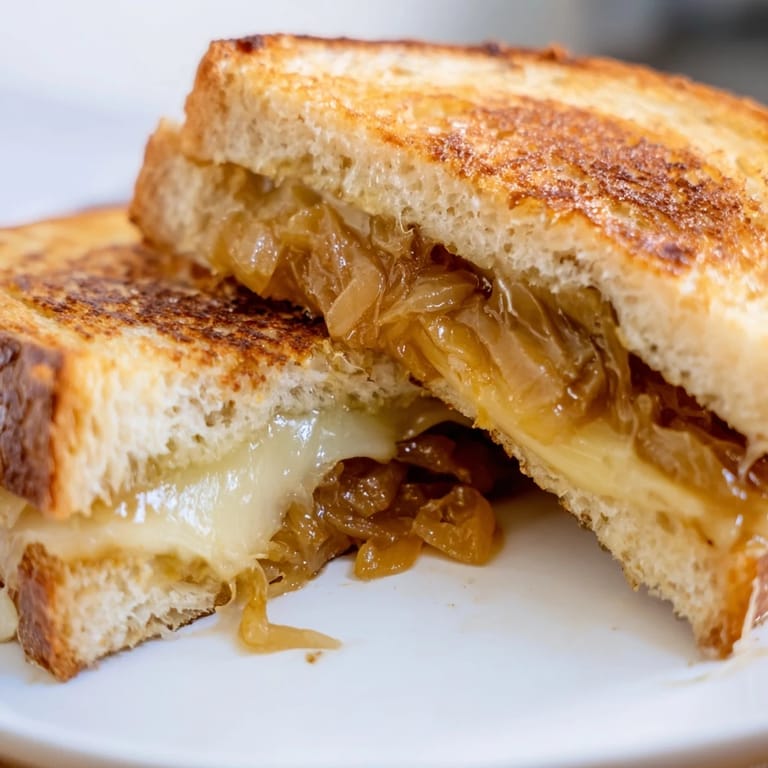
- Heat olive oil in a large skillet over medium heat and add the sliced onions with the salt, stirring to coat them evenly. Let them cook, stirring every few minutes, for 20 to 25 minutes until they turn deeply golden and soft, adding the sugar halfway through if you want to speed up the browning or boost the sweetness.
- Set onions aside:
- Remove the caramelized onions from the heat and transfer them to a bowl. Wipe out the skillet if there are any stuck bits so your bread doesn't pick up burned flavor.
- Butter the bread:
- Spread softened butter on one side of each bread slice, making sure to cover all the way to the edges. Lay two slices buttered side down on your work surface.
- Assemble the sandwiches:
- Divide the grated cheddar between the two slices, then pile the caramelized onions evenly over the cheese and sprinkle with black pepper. Top with the remaining bread slices, buttered side facing up.
- Grill the sandwiches:
- Heat the skillet over medium-low and place both sandwiches in the pan, cooking for 3 to 4 minutes per side and pressing gently with a spatula until the bread turns crisp and golden and the cheese melts completely. Lower the heat if the bread browns too fast before the cheese has a chance to soften.
- Rest and serve:
- Remove the sandwiches from the pan and let them sit for 2 minutes so the cheese sets slightly. Slice and serve hot.
 Save
Save A friend came over once and watched me make this, convinced it was too simple to be impressive. She took one bite and stopped talking, then asked me to write it down. I didn't have anything to write, just onions, cheese, bread, heat, and time. She said that was the point.
Choosing Your Bread
Sourdough gives you that slight tang that plays off the sweetness of the onions, and the dense crumb doesn't get soggy under all that moisture. Country bread works the same way, with a sturdier texture that crisps up beautifully in butter and holds the filling without falling apart. Avoid soft sandwich bread unless you want a mushy center and uneven browning. I learned that the hard way with a loaf that disintegrated halfway through flipping.
Making the Onions Ahead
Caramelized onions keep in the fridge for up to a week in an airtight container, and they actually taste better the next day after the flavors settle. I make a big batch on Sunday and use them in eggs, on pizza, stirred into pasta, or piled into these sandwiches all week long. Just reheat them gently in a pan with a splash of water to loosen them up before assembling your grilled cheese. It turns a 50-minute recipe into a 10-minute dinner without losing any of the magic.
Variations and Add-Ins
Sometimes I tuck a few fresh thyme leaves into the sandwich before grilling, and the herbaceous note wakes up the sweetness without overpowering it. A thin smear of Dijon mustard on the inside of the bread adds a sharp kick that balances the richness of the cheese and butter. Gruyère melts into silky pools and tastes a little nutty, while fontina brings a creamier, milder flavor if sharp cheddar feels too strong.
- Try adding a handful of baby spinach or arugula for a peppery crunch that contrasts with the soft onions.
- A drizzle of balsamic glaze over the onions before closing the sandwich adds a sweet-tart complexity.
- Swap in whole grain or rye bread if you want a heartier, earthier flavor that stands up to the richness.
 Save
Save This sandwich doesn't need much to be memorable, just good timing and a little attention to the details that make the difference between fine and perfect. Serve it hot, with soup or salad or nothing at all, and let it remind you that comfort doesn't have to be complicated.
Recipe FAQs
- → How long does caramelizing onions actually take?
Caramelizing onions typically takes 20-25 minutes over medium heat. Patience is essential—rushing the process results in merely softened onions rather than the deep golden, complex flavors of true caramelization. Stir occasionally to ensure even browning.
- → Can I use a different cheese besides sharp white cheddar?
Absolutely. Gruyère, fontina, and aged provolone are excellent alternatives that pair beautifully with caramelized onions. Choose cheeses that melt smoothly and have rich, complex flavors to complement the sweet onions.
- → What bread works best for this sandwich?
Sourdough and country bread are ideal because they're sturdy enough to contain the filling without falling apart, plus their slight tang complements the sweet onions and sharp cheese. Avoid thin white bread that will become soggy.
- → How do I prevent the bread from burning while melting the cheese?
Use medium-low heat and avoid pressing too hard with your spatula. This allows the cheese to melt gradually while the bread toasts gently. If the exterior browns too quickly, lower the heat further and cook longer.
- → Should I add sugar to the onions?
Sugar is optional but helpful. A half-teaspoon enhances caramelization and brings out natural sweetness, especially if your onions lack inherent sweetness. It's not necessary but can deepen the flavor profile.
- → What pairs well with this sandwich for a complete meal?
Tomato soup is the classic pairing—the acidity cuts through the richness beautifully. A simple green salad with vinaigrette or roasted vegetables also complement the sandwich's buttery, caramelized nature perfectly.