 Save
Save There's something about assembling a poke bowl that feels less like cooking and more like creating edible art. I discovered this dish on a humid afternoon, scrolling through photos of Hawaii, and decided right then that I needed something fresh and alive on my plate that evening. The beauty of a poke bowl is that it asks nothing of heat or timing—just sharp knives, good instincts, and ingredients that taste like themselves. Twenty minutes later, I was sitting with a luminous bowl of jewel-toned fish, crisp greens, and that silky sesame oil dressing that changed everything about how I thought of salads.
I made this for a friend who'd just moved back to the city, and watching her face when she took the first bite made me understand why people get sentimental about food. She said it tasted like a vacation she couldn't afford, and I realized that poke bowls are one of those rare dishes that deliver both sophistication and comfort. Since then, whenever someone says they want something healthy but exciting, this is what appears on their table.
Ingredients
- Sushi-grade salmon or tuna: This is the star, so it must be impeccably fresh—ask your fishmonger to cut it into 1 cm cubes, or do it yourself with a razor-sharp knife that glides without dragging.
- Soy sauce: Use tamari or a certified gluten-free version if needed, and taste the marinade before adding the fish so you can adjust the salt level.
- Sesame oil: The toasted kind brings an unmistakable warmth that transforms everything it touches.
- Rice vinegar: This gentle acid brightens the entire bowl without overwhelming the delicate fish.
- Fresh ginger: Grate it just before mixing—the oils that release from freshly grated ginger smell like clarity itself.
- Mixed greens: Any combination works, but I prefer a mix of textures: soft spinach, peppery arugula, and crisp romaine.
- Avocado: Slice this last, just before serving, so it doesn't oxidize and lose that buttery glow.
- Cucumber and carrots: The crunch matters here; julienne the carrots thin so they catch the dressing, and slice the cucumber at an angle so it feels intentional.
- Toasted sesame seeds: Buy them already toasted if you can—their nutty deepness is non-negotiable.
- Nori strips: These add a whisper of the sea and a satisfying snap between your teeth.
Tired of Takeout? 🥡
Get 10 meals you can make faster than delivery arrives. Seriously.
One email. No spam. Unsubscribe anytime.
Instructions
- Build your dressing:
- In a small bowl, whisk together soy sauce, sesame oil, rice vinegar, grated ginger, honey, and minced garlic until the honey dissolves completely and the mixture smells warm and aromatic. Taste it—this is your moment to adjust salt or sweetness before the fish goes in.
- Marry the fish to the marinade:
- Add your cubed fish to the dressing and turn it gently, as if you're tucking it into something precious. Cover and refrigerate for at least 10 minutes, which gives the fish time to absorb the flavors while you prep everything else.
- Arrange the canvas:
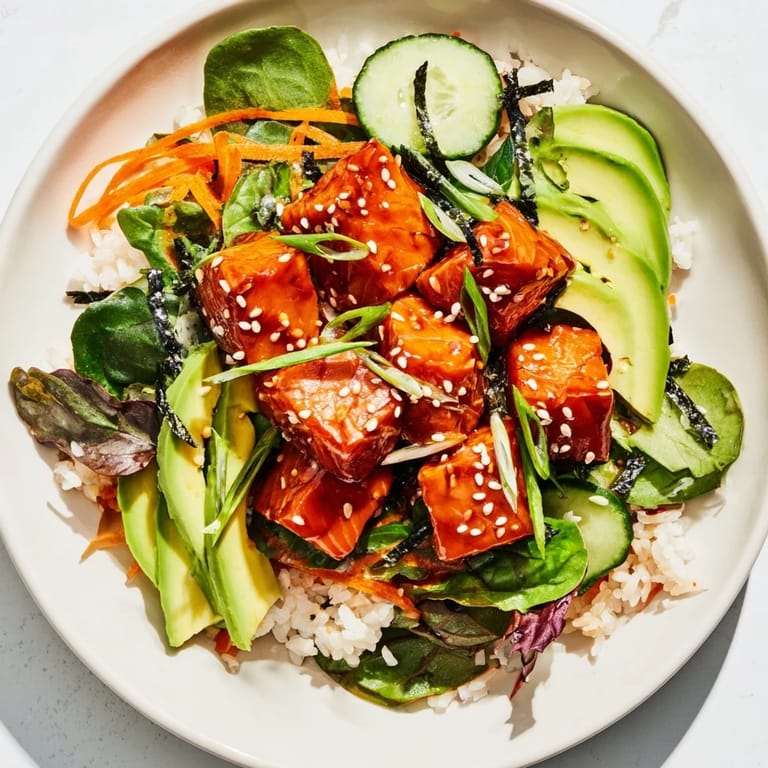
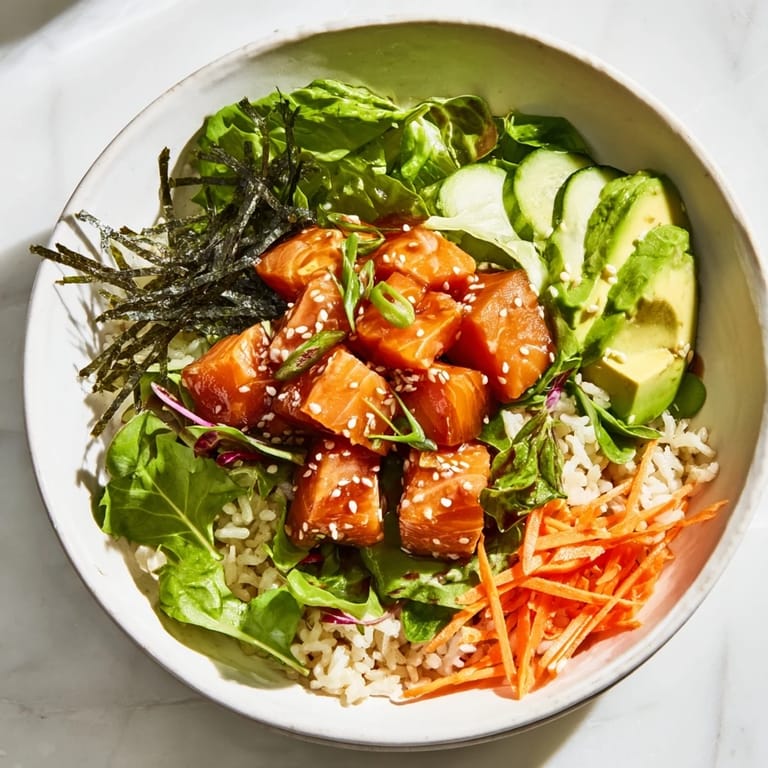
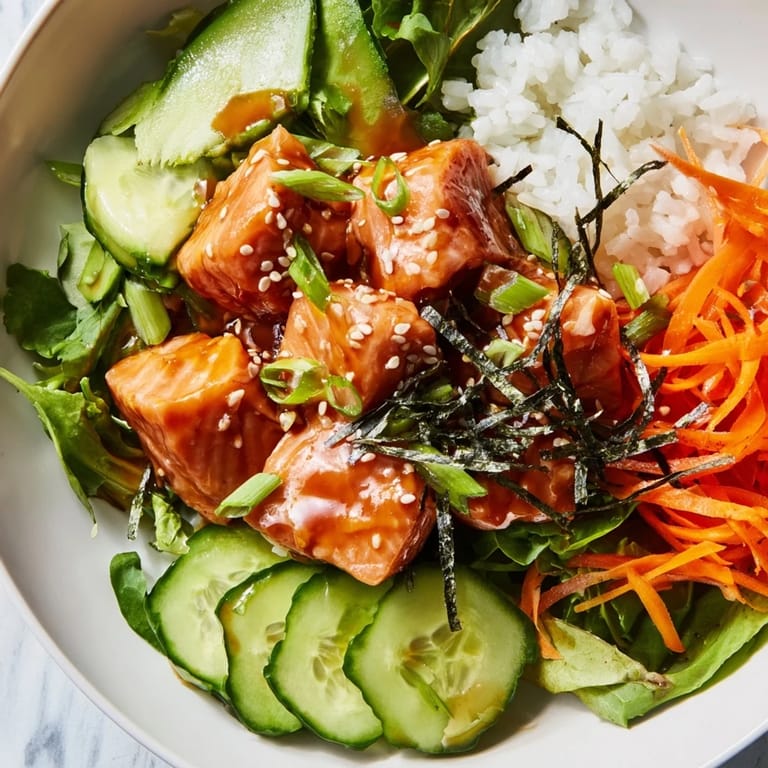
- In individual bowls, layer your greens as the foundation, then arrange cucumber slices, avocado, carrots, and rice in sections, leaving room in the center for the fish. Think of it as building a landscape where each color and texture has its place.
- Crown each bowl:
- Spoon the marinated fish directly into the center of each bowl, making sure some of that liquid gold of a marinade comes too. It's the sauce that ties everything together.
- Finish with intention:
- Scatter sesame seeds across the top like you mean it, add the nori strips, a small mound of pickled ginger on the side, and a few slices of chili if you want heat. Serve immediately while the fish is cool and the greens still have their snap.
 Save
Save There was a moment last summer when my mom took a bite of her poke bowl and said, 'This is what I imagine eating on a patio in Honolulu feels like,' and I understood that food isn't just about nutrition or flavor—it's about the feeling it gives you, the permission it grants you to slow down. That's what these bowls do.
Choosing Your Fish
Not all salmon is created equal, and this dish will expose that truth immediately. I've learned to befriend my fishmonger, to ask when the fish came in, to watch their face as they cut it—you can tell if someone respects their fish by how they handle it. Salmon and tuna both work beautifully, but they have different personalities: salmon is buttery and forgiving, while tuna is lean and assertive. Choose based on your mood and what looks most alive in the case.
The Rice Question
Some people argue that a poke bowl isn't complete without rice, and others say it dilutes the purity of a salad. I'm of the third school: it depends on the day and your hunger. When I add rice, I use sushi rice that's been cooled completely, because warm rice would wilt the greens and mute the dressing. Brown rice works too and brings an earthiness that white rice doesn't. Either way, if you're including it, it should feel like an intentional choice, not an afterthought.
Dressing and Flavor Balance
The dressing is where the magic lives, and it's forgiving enough to adjust to your taste. I've made this with less honey for friends who prefer dry flavors, and with extra ginger for people who want their food to wake them up. The sesame oil is the anchor—it's what makes this taste like poke and not just 'chopped-up raw fish on salad.' Trust the dressing, even if it seems thin when you whisk it; it will coat everything it touches.
- Make the dressing first and let it sit for a few minutes so the flavors marry before the fish arrives.
- If you're nervous about raw fish, this is not the dish for you—but if you're here, trust that sushi-grade means safe and delicious.
- Serve your poke bowl cold and fresh, because that's when it's most itself.
 Save
Save A poke bowl is proof that the best meals don't require heat, stress, or elaborate technique—just respect for good ingredients and the confidence to let them speak. Make this for yourself on a night when you need something that tastes like care.
Recipe FAQs
- → Can I substitute the fish with a plant-based option?
Yes, diced marinated tofu or tempeh provide excellent plant-based alternatives that absorb the marinade flavors well.
- → What type of rice works best in this dish?
Cooked and cooled sushi rice brings traditional texture, though brown rice can be used for added fiber and nuttiness.
- → How long should the fish marinate?
Marinating for at least 10 minutes allows the soy-ginger dressing to infuse flavor without overwhelming the fresh fish.
- → Is this salad suitable for a gluten-free diet?
Use certified gluten-free soy sauce (tamari) to keep the dish gluten-free while maintaining its rich flavor.
- → What garnishes enhance the dish’s flavor and texture?
Toasted sesame seeds, sliced scallions, nori strips, and pickled ginger add layers of crunch, aroma, and savory notes.