 Save
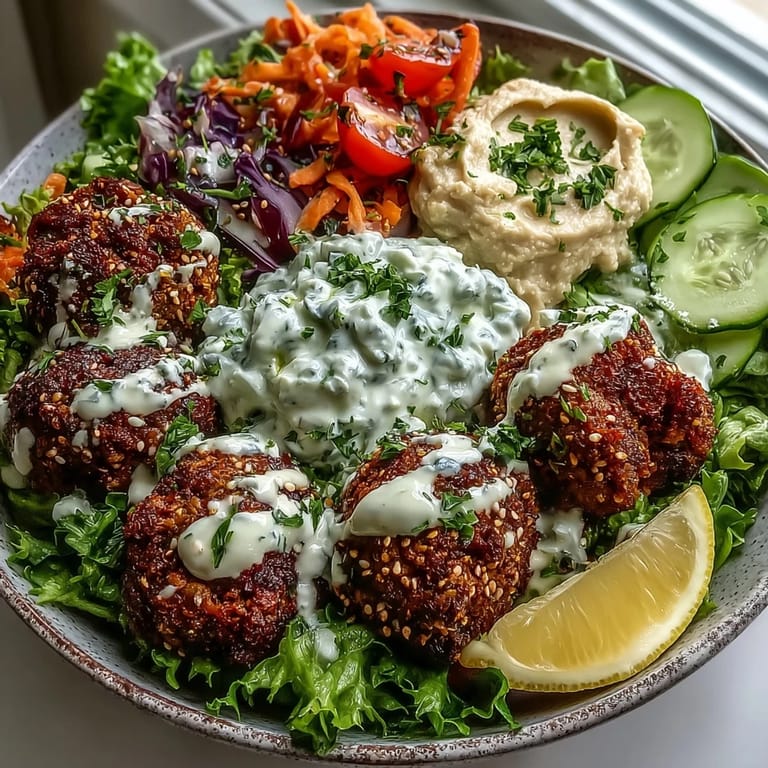
Save My neighbor stopped by one afternoon with a bag of store-bought falafel, insisting I needed to try something beyond my usual salad routine. Twenty minutes later, I had assembled this bowl on my kitchen counter, and honestly, it was a revelation—crispy falafel meeting cool, creamy spreads with a sprinkle of sesame that caught the light. That casual afternoon taught me that some of the best meals come together without fuss, just a few good ingredients and the willingness to layer flavors.
I made this for a small potluck once, skeptical that something so simple would stand out among the usual casseroles and pasta salads. Three people asked for the recipe before dessert was even served, and one friend admitted she'd been eating sad desk salads for years without realizing bowls like this existed. That moment solidified it for me—sometimes the most elegant meals are the ones that look effortless.
Ingredients
- Store-bought or homemade falafel: Twelve balls is the sweet spot for feeding four people without overdoing it; crispy exteriors with tender, spiced centers are what you're after.
- Hummus: This creamy base anchors the whole bowl, so don't skimp on quality or consider making your own if you have chickpeas on hand.
- Tzatziki: The cool, cucumber-forward contrast is essential; it cuts through the richness and adds brightness that ties everything together.
- Tahini sauce: A drizzle of this nutty, slightly savory sauce elevates the entire experience and brings cohesion to disparate ingredients.
- Mixed salad greens: Choose whatever feels fresh and crisp; arugula adds a peppery note, spinach brings earthiness, and romaine gives you substance.
- Cherry tomatoes: Halving them prevents rolling around the bowl and makes them easier to eat; their sweetness balances the savory elements.
- Cucumber: Slice it thin so it softens slightly as it sits, absorbing flavors from the dressings without becoming mushy.
- Red onion: A paper-thin slice adds bite and a subtle sharpness that wakes up your palate with each bite.
- Shredded carrots: Their natural sweetness and crunch provide textural variety that keeps the bowl interesting.
- Fresh parsley: More than just garnish, it adds a fresh herbal note that whispers rather than shouts.
- Toasted sesame seeds: The toasting matters tremendously; it deepens the nutty flavor and adds visual appeal.
- Lemon wedges: A squeeze of fresh citrus at the end brightens everything and ties the flavors together.
Tired of Takeout? 🥡
Get 10 meals you can make faster than delivery arrives. Seriously.
One email. No spam. Unsubscribe anytime.
Instructions
- Warm your falafel:
- If you're using store-bought, follow the package instructions—usually a quick oven warm or a brief pan-fry works beautifully. If homemade, cook them your preferred way and let them cool just slightly so they're still warm but not too hot to handle.
- Build your creamy base:
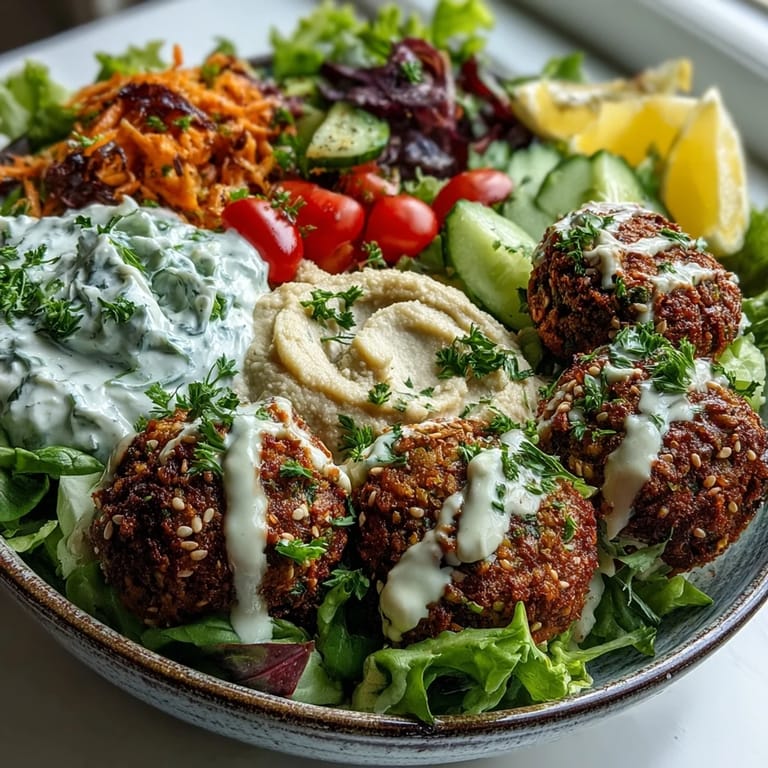
- Spoon a generous scoop of hummus onto the bottom of each bowl, then dollop tzatziki alongside it. These two create pockets of creaminess that everything else will nestle into.
- Layer your greens:
- Arrange your mixed greens over the spreads, creating a bed that's sturdy enough to support the vegetables but loose enough to feel fresh and alive.
- Arrange the vegetables:
- Scatter cherry tomato halves, cucumber slices, red onion slivers, and shredded carrots across the greens with a light hand. You're creating a visual landscape as much as a flavor profile.
- Place the falafel:
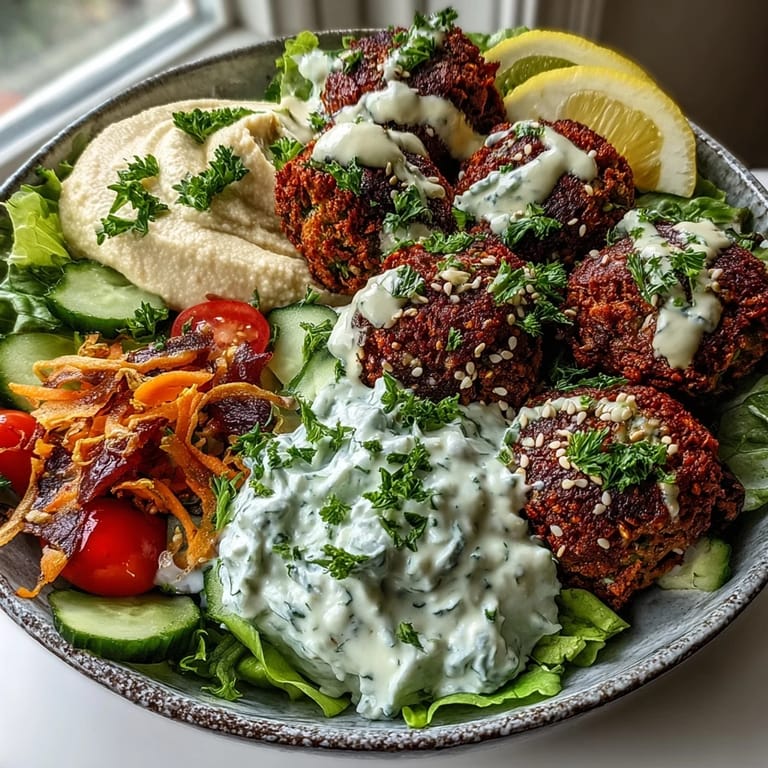
- Top with three falafel balls per serving, positioning them so they're visible and inviting. They're the stars of the show, so give them prominence.
- Finish with tahini and garnish:
- Drizzle tahini sauce across the entire bowl in a gentle pattern, then scatter parsley and toasted sesame seeds on top. A lemon wedge rests on the rim, ready for squeezing.
- Serve with intention:
- Bring the bowl to the table while everything is still cool and crisp, allowing your guests or yourself to mix and match with each bite.
 Save
Save There's something about watching someone eat one of these bowls for the first time that gets me every time—the way they pause after the first bite, reconsidering whatever they thought they knew about vegetarian meals. It's become my go-to dish for feeding people, the kind that quietly proves that vegetables and legumes can be just as satisfying and exciting as anything else.
Making It Your Own
The beauty of this bowl is that it's a template, not a prescription. I've added roasted sweet potato, grilled eggplant, and even shredded beets depending on what the season offered or what I had lingering in my crisper drawer. One winter evening, I tossed in some pomegranate arils and it transformed the entire experience—suddenly there was sweetness and tartness dancing with the other flavors, a happy accident that became intentional.
Storage and Meal Prep
I've learned that prepping components separately means you can assemble these bowls throughout the week without the salad turning to mush. The spreads, vegetables, and falafel all keep for several days when stored in separate containers, and there's something satisfying about opening your fridge and knowing you can have lunch ready in five minutes. The only thing I assemble fresh is the greens on top—they deserve to be crisp and vibrant.
Pairing and Serving Suggestions
This bowl sings alongside a crisp white wine or, if you're avoiding alcohol, a tall glass of mint tea with lots of ice offers similar refreshment. I've also discovered that warm pita bread on the side transforms this from a bowl into something more interactive—people start wrapping falafel and vegetables in pita, creating their own handheld moments. Serve it at room temperature if you prefer, or chill everything except the falafel for a more refreshing summer version that feels lighter somehow.
- A squeeze of hot sauce or sriracha adds depth if you're craving heat and complexity.
- Swapping out the greens for cooked quinoa or brown rice creates a heartier, more substantial meal.
- Pickled vegetables or kalamata olives scattered on top add briny, funky notes that elevate the entire experience.
 Save
Save This bowl has become my answer to the question of what to make when I want something satisfying, beautiful, and entirely fuss-free. It's proof that cooking doesn't require complexity to feel special.
Recipe FAQs
- → Can I make this bowl ahead of time?
Yes, prepare components separately in advance. Store falafel, vegetables, and sauces in airtight containers. Assemble just before serving to maintain texture and freshness.
- → How do I store leftovers?
Keep ingredients separate in sealed containers. Falafel stays fresh 2-3 days refrigerated. Reheat falafel in oven or air fryer to restore crispiness before assembling.
- → What proteins can substitute falafel?
Grilled chicken, roasted chickpeas, or marinated tofu work well. For vegan options, try baked tempeh or additional legumes like lentils.
- → Is this suitable for meal prep?
Absolutely. Portion ingredients into meal prep containers. Keep sauce drizzle separate until serving to prevent sogginess. Reheat falafel and add fresh garnishes when ready to eat.
- → Can I make it gluten-free?
Ensure your falafel and hummus are certified gluten-free. Many store-bought versions contain wheat. Check labels carefully or prepare homemade versions using gluten-free ingredients.