 Save
Save I discovered this bowl on a Tuesday afternoon when my pantry felt bare but my fridge overflowed with vegetables that needed rescuing. The smell of toasted sesame oil mixing with fresh ginger changed everything, turning what could have been a sad desk lunch into something I actually looked forward to eating. Now it's become my go-to when I need something satisfying, colorful, and ready faster than I'd expect.
I made this for my roommate once when she came home stressed about work, and she ate it so quietly and peacefully that I knew I'd created something special. She asked for the recipe before she even finished the bowl, which felt like the highest compliment possible.
Ingredients
- Brown rice: Use short-grain or long-grain, whichever you prefer; I've learned the texture matters more than you'd think, and rinsing beforehand prevents mushiness.
- Cooked chickpeas: Canned saves time and works beautifully, but if you cook dried ones, they hold their shape better and taste earthier.
- Roasted unsalted peanuts: The salt-free variety lets the dressing shine; toasted ones add a depth that raw ones simply can't match.
- Shredded carrot: The sweetness balances the savory dressing in ways that feel almost magical when it hits your tongue.
- Red cabbage: It stays crisp longer than regular cabbage and brings a subtle sweetness that rounds out the bowl.
- Cucumber: Cooling and refreshing, it keeps the whole experience from feeling heavy even though you're eating protein-packed ingredients.
- Scallions: The raw onion bite is essential; it wakes up your palate with every bite.
- Cilantro: Optional but genuinely transforms the experience if you're someone who loves fresh herbaceous notes.
- Creamy peanut butter: The foundation of your dressing; natural or conventional both work, just make sure it's smooth enough to whisk without lumps.
- Soy sauce or tamari: This brings umami depth that makes the whole bowl taste intentional and complex.
- Maple syrup or honey: Just enough sweetness to balance the salt and acid without making it dessert.
- Rice vinegar or lime juice: Acid brightens everything; lime gives you sharper citrus while vinegar feels more delicate.
- Sesame oil: A little goes a long way; this is where that toasted aroma comes from.
- Fresh ginger: Minced small, it adds warmth and prevents the dressing from tasting one-note.
- Garlic: One clove is honestly enough because the other flavors will carry it.
- Chili flakes: Optional but I always include them for a gentle heat that creeps up on you pleasantly.
Tired of Takeout? 🥡
Get 10 meals you can make faster than delivery arrives. Seriously.
One email. No spam. Unsubscribe anytime.
Instructions
- Rinse and start your rice:
- Run cold water over the brown rice in a fine-mesh strainer until the water runs clear; this removes starch and prevents gumminess. Combine rinsed rice with water and salt in your saucepan, bring to a boil, then drop to low heat, cover, and let it bubble gently for 30 to 35 minutes.
- Make your dressing while rice cooks:
- In a small bowl, whisk together peanut butter, soy sauce, maple syrup, rice vinegar, sesame oil, ginger, garlic, and chili flakes until they start coming together. Gradually add warm water a splash at a time until you reach that perfect drizzle consistency, thinner than peanut butter but thick enough to coat.
- Prep your vegetables:
- Use a box grater or vegetable shredder for the carrot and cabbage so everything feels cohesive; thinly slice your cucumber and scallions with a sharp knife so they catch light and add visual appeal. Chop your cilantro roughly if you're using it.
- Fluff and rest your rice:
- When the rice is tender, remove it from heat and let it sit covered for 5 minutes to steam gently. Fluff it with a fork and taste for seasoning.
- Assemble your bowls:
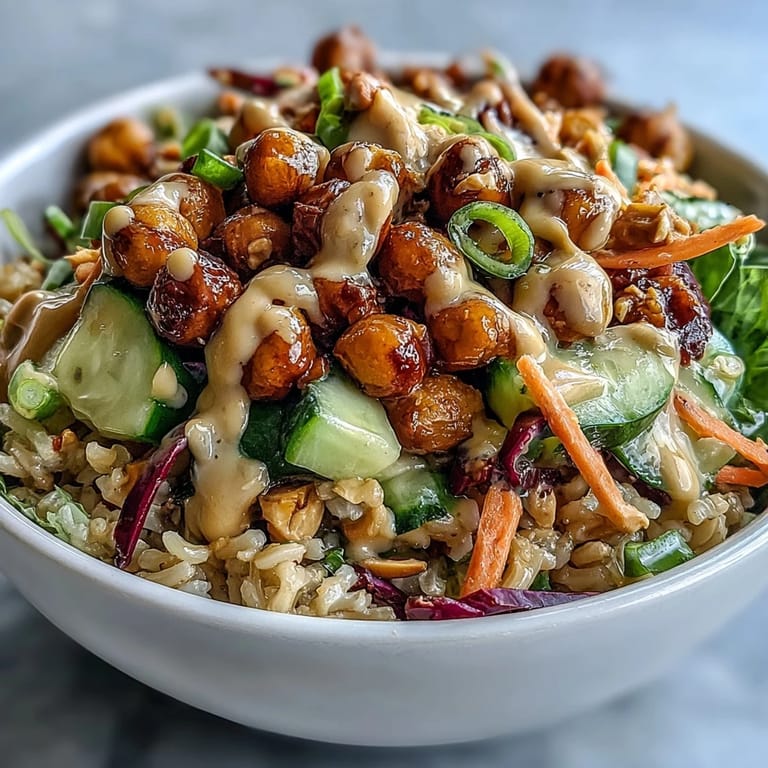
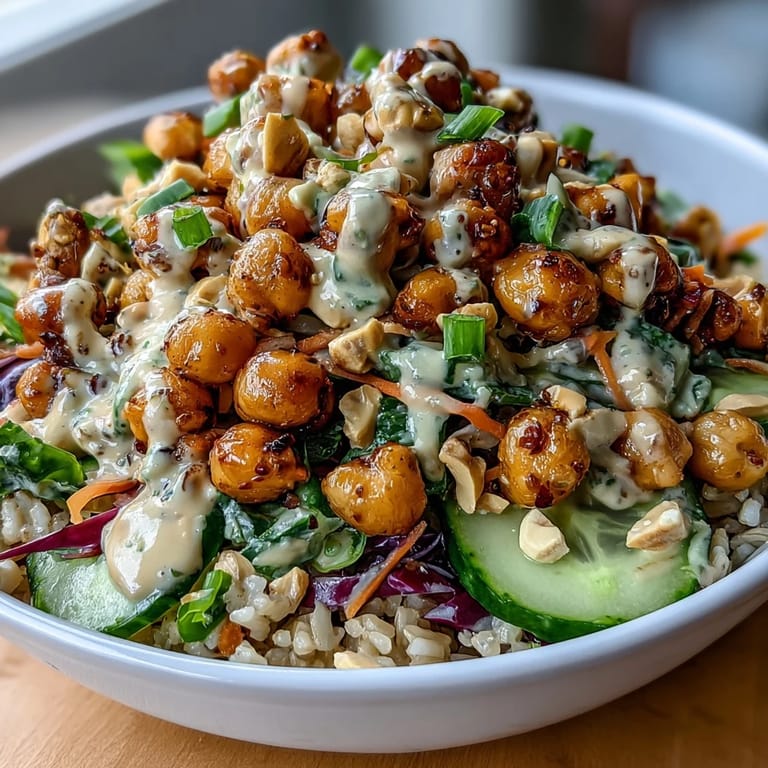
- Divide cooked rice among four bowls, then build your layers: chickpeas, peanuts, shredded vegetables, and scallions arranged however makes you happy. This isn't strict; let your instincts guide you.
- Dress and garnish:
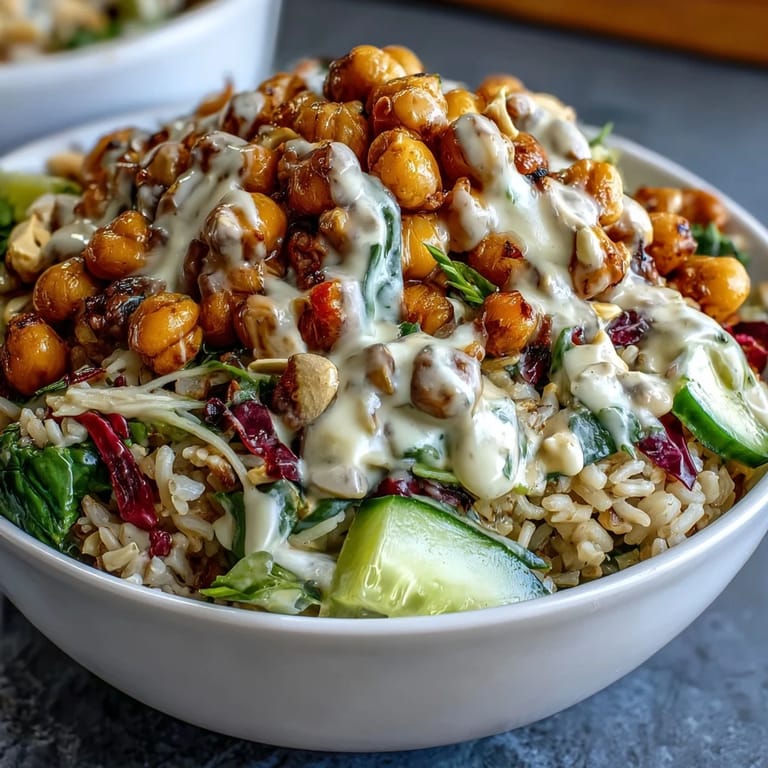
- Drizzle generously with peanut dressing so every bite gets the sauce it deserves. Top with cilantro and extra peanuts for crunch.
- Serve fresh or chilled:
- Eat immediately while everything is warm and crisp, or refrigerate and enjoy it cold the next day when flavors have melded together.
 Save
Save There's something deeply comforting about eating from a bowl where every component is visible and intentional, where you can see the vibrant colors before you even taste anything. This became my ritual on days when life felt chaotic, a small act of nourishment that felt like self-care.
Variations and Substitutions
I've made this bowl with white rice when brown wasn't available, and while the texture differs slightly, the whole thing still works beautifully. Bell peppers, edamame, avocado, or even shredded beets slot in seamlessly if they're what you have on hand. The dressing is forgiving enough that you can swap lime juice for rice vinegar, or use almond butter if peanuts aren't your thing, though the character shifts slightly.
Storage and Make-Ahead Tips
I learned the hard way that dressing a full bowl of vegetables and rice hours ahead turns everything into a soggy situation, so I keep the dressing separate and dress individual bowls right before eating. Rice stores beautifully for 4 to 5 days in the refrigerator, and prepped vegetables last about the same timeframe if you keep them in airtight containers. The peanut dressing lasts almost a week, so you could actually prepare multiple bowls throughout the week without redoing any work.
Pairing and Serving Ideas
A crisp white wine or cold iced green tea genuinely completes this experience; the tea especially adds another layer of freshness that feels intentional. I've served this at casual dinners and everyone seemed surprised by how filling and balanced it tasted, like you were getting restaurant-quality food from your home kitchen. The fact that it's vegan means you're not leaving anyone out of the celebration.
- Serve this cold straight from the fridge on hot summer days for a completely different eating experience.
- Double the dressing batch and use it on salads, roasted vegetables, or even as a sandwich spread throughout the week.
- If anyone at your table has a soy allergy, tamari swaps in perfectly without changing a thing.
 Save
Save This bowl has quietly become the thing I make when I want to feel like I'm taking care of myself without any fuss. It's honest food that tastes intentional, every single time.
Recipe FAQs
- → Can I make this bowl ahead of time?
Absolutely. The components store well separately for 3-4 days. Keep the dressing in a separate container and assemble just before serving to maintain the fresh crunch of vegetables.
- → What other vegetables work well in this bowl?
Bell peppers, edamame, shredded Brussels sprouts, or snap peas make excellent additions. The base is versatile, so use whatever fresh vegetables you have on hand.
- → How can I add more protein?
Try adding baked tofu, grilled chicken strips, or a soft-boiled egg. The chickpeas already provide 15g of protein per serving, but these options can boost it further.
- → Is the peanut dressing gluten-free?
It can be. Simply substitute regular soy sauce with tamari or coconut aminos. All other ingredients including peanut butter, rice vinegar, and sesame oil are naturally gluten-free.
- → Can I use other nut butters?
Almond butter or cashew butter work beautifully as substitutes. The flavor profile will shift slightly but still deliver that creamy, nutty richness that ties the bowl together.