 Save
Save The first time I made this bowl, I wasn't trying to recreate some viral TikTok moment—I was just standing in my kitchen at 6 PM with leftover salmon, cold rice, and the kind of hunger that needed solving in minutes. Something about the simplicity clicked: warm rice hitting cold avocado, the umami punch of soy sauce cutting through creamy mayo, and then wrapping it all up in a crispy seaweed sheet like I'd figured out something brilliant. Turns out, millions of people had already discovered this exact magic, but that didn't make my kitchen feel any less like I'd stumbled onto gold.
I made this for my roommate on a random Thursday when she'd had a terrible day, and watching her face light up as she took that first bite—rolling it in seaweed, the whole thing falling apart in the best way—reminded me that sometimes the most healing meals are the ones that don't pretend to be fancy. She asked for the recipe immediately, which meant I had to explain it wasn't some secret formula, just timing and decent ingredients treated with a little care.
Ingredients
- Salmon fillet (6 oz, cooked and flaked): Use cooked salmon because it's faster and honestly, it flakes more beautifully than raw fish ever could—skin removed means no tough bits between your teeth.
- Short-grain rice (2 cups cooked, preferably chilled): Day-old rice from the fridge is non-negotiable; it stays separate instead of getting mushy, and the cold texture plays perfectly against warm salmon.
- Soy sauce (2 tablespoons total): Divide it between the initial heating and the final assembly so the seasoning hits at different moments for layered flavor.
- Japanese mayonnaise (1 tablespoon): Kewpie brand specifically has more egg yolk and less water, making it creamier and richer than regular mayo—it matters more than you'd think.
- Sriracha sauce (1 tablespoon): This brings heat and slight sweetness, but honestly swap it for chili crisp if you want texture or another hot sauce if you want different spice.
- Avocado (1 ripe, sliced): Add it right before eating so it doesn't brown and stays buttery instead of becoming sad and gray.
- Green onion (1, thinly sliced): Optional but not really—it adds a bright bite that cuts through all the richness like a palate cleanser.
- Toasted sesame seeds (1 teaspoon): Don't skip toasting them yourself if you can; it unlocks a deeper, nuttier flavor that raw seeds just can't deliver.
- Roasted seaweed sheets (6–8 sheets): These are the vehicle and the vessel—buy the snack-sized nori sheets because they're the right thickness and crispness for wrapping.
Tired of Takeout? 🥡
Get 10 meals you can make faster than delivery arrives. Seriously.
One email. No spam. Unsubscribe anytime.
Instructions
- Assemble and warm the base:
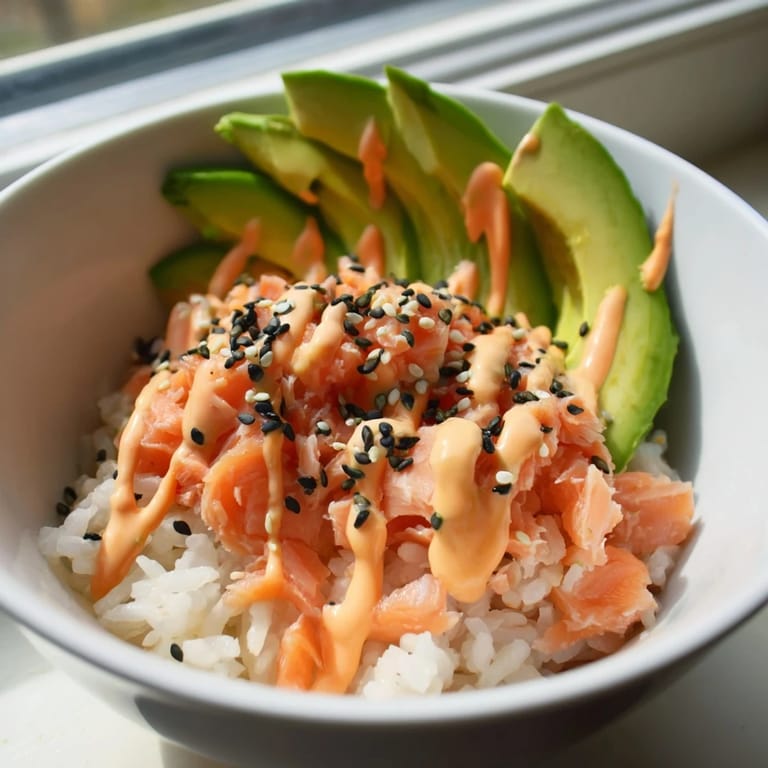
- Scoop your cold rice into a microwave-safe bowl and top it generously with flaked salmon, then sprinkle the first tablespoon of soy sauce over everything. Cover loosely with parchment or a microwave-safe lid and heat on high for 1–2 minutes until you can smell the salmon warming through and the rice is hot enough that steam rises when you uncover it.
- Build the flavor layers:
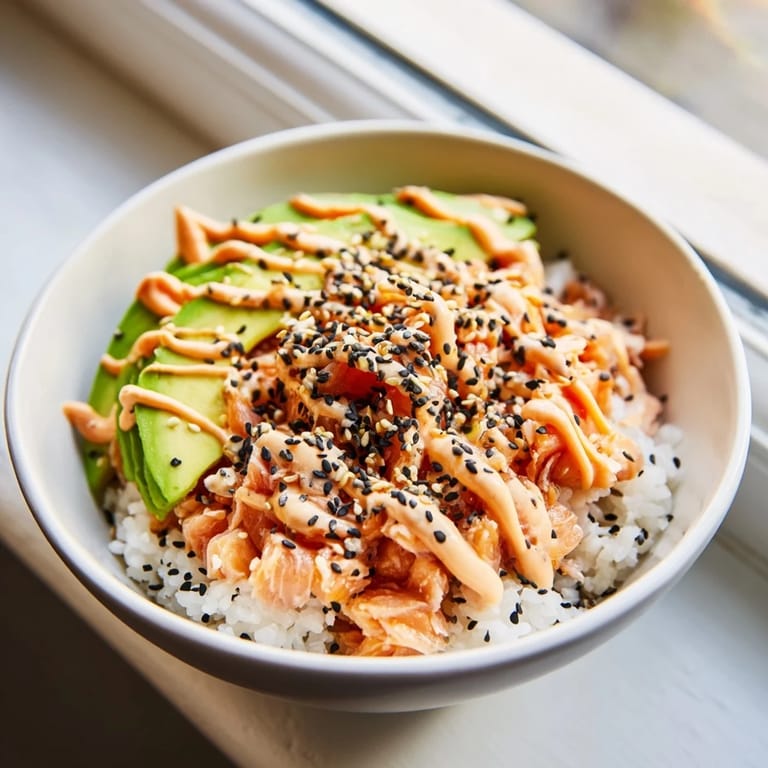
- Once it's warm, drizzle the Japanese mayo and sriracha across the top in a pattern rather than dumping it all in one spot—this way some bites get more heat and some get more creaminess. Add that second tablespoon of soy sauce if you like things saltier, and give everything a gentle mix with a fork.
- Finish and serve:
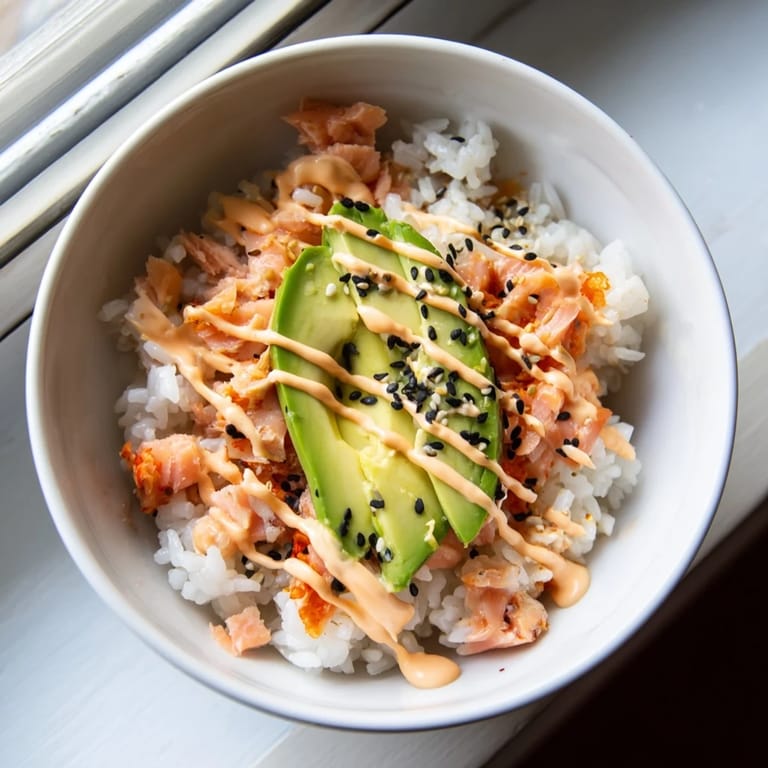
- Fan your avocado slices across the top, scatter green onion and sesame seeds over everything, and bring the bowl directly to the table with the seaweed sheets on the side. The ritual of assembling each bite in seaweed is half the fun—it's interactive and keeps everything crisp instead of soaking into the rice.
 Save
Save There's a moment when you wrap that first seaweed sheet around a spoonful of everything and it all holds together perfectly—not falling apart, not too packed, just the right amount of give—where you realize you've made something that feels both comforting and exciting. That's when it stops being a recipe and becomes a ritual you'll want to repeat.
The Seaweed Sheet Technique
The seaweed sheets aren't just garnish; they're your edible utensil and flavor enhancer rolled into one crispy, salty bite. Lay the sheet in your palm, spoon a generous amount of the salmon rice mixture into the center, and fold or roll it depending on how you want the textures to interact—some people prefer a neat roll, others like it more casual and hand-held. The nori adds umami and a satisfying crunch that contrasts beautifully with the creamy mayo and soft avocado.
Why Cold Rice Changes Everything
I learned this the hard way by using fresh, warm rice the first time and watching it turn into a mushy situation instead of individual grains that coat evenly with soy sauce and mayo. Leftover rice chilled in the fridge for even a few hours firms up and stays separate, giving you texture with every bite instead of a bowl that feels like risotto had a baby with congee. This is why restaurant sushi rice always feels better than homemade—they use day-old rice deliberately, not by accident.
Customization and Swaps That Work
The beauty of this bowl is that it's more of a template than a rigid recipe, which means you can play around without breaking anything. If salmon feels fancy or expensive on a Tuesday, canned salmon does the same job, or swap it for cooked tuna, shrimp, or even marinated tofu if you want to go vegetarian. A sprinkle of furikake adds a completely different dimension of umami if you're looking for extra depth, and a few drops of rice vinegar brighten everything up if the bowl tastes too rich.
- Chili crisp instead of sriracha gives you crunch and a different kind of heat that some people prefer.
- Add cucumber slices or pickled ginger if you want more freshness and crispness breaking up the richness.
- A soft-boiled egg on top makes it a completely different meal that's somehow even more satisfying.
 Save
Save This bowl has become my answer to the question of what to eat when you want something that feels like actual cooking but doesn't demand hours or complicated steps. Every time I make it, it tastes like something I figured out myself, even though I'm standing in a line of millions of people who discovered the same beautiful thing.
Recipe FAQs
- → Can I use freshly cooked rice instead of leftover?
Yes, but day-old chilled rice works best for texture and prevents mushiness. If using fresh rice, spread it on a plate to cool completely before assembling the bowl.
- → What type of rice works best?
Short-grain rice, such as sushi or Japanese rice, is ideal because it's stickier and holds the bowl together. Medium-grain rice is a good alternative.
- → How do I heat the bowl without drying out the salmon?
Microwave on high for 1-2 minutes with a loose cover using parchment or a microwave-safe lid. This gently warms the ingredients while maintaining moisture and texture.
- → Can I substitute mayonnaise for Japanese mayonnaise?
Japanese mayonnaise (Kewpie) has a richer flavor, but regular mayo works in a pinch. Mix it with a splash of rice vinegar to mimic the authentic taste.
- → Is this suitable for meal prep?
Absolutely. Prepare components separately and assemble fresh when ready to eat. Store cooked rice and salmon in airtight containers for up to 3 days. Add avocado just before serving.
- → What are good substitutions for salmon?
Canned salmon, cooked tuna, or grilled white fish work wonderfully. Adjust cooking time based on your protein choice and ensure it's fully cooked before serving.