 Save
Save There's something about the smell of mustard seeds hitting hot oil that instantly transports me to my friend Priya's kitchen—that sharp, almost popcorn-like pop that signals something delicious is about to happen. Years ago, she taught me that dhal isn't just a side dish; it's a canvas for warmth and comfort, especially when paired with something textured and unexpected. The first time I added roasted cauliflower to the mix, I wasn't even sure it would work, but that nutty, golden crispness against the creamy lentils felt like discovering something I'd been missing all along. Now it's become my go-to meal when I want something that feels nourishing without feeling like work.
I made this for a dinner party on a rainy autumn evening, and honestly, I was nervous—would my guests find it interesting enough, or would they miss the meat? But watching people go back for thirds, asking about the 'secret ingredient' (spoiler: it's just good technique and patience), reminded me that the best meals are the ones made with care, not complicated recipes. One guest asked if she could take the leftovers home, and I knew it had landed.
Ingredients
- Red lentils: These cook down into a silky, almost velvety texture that's impossible to replicate with other varieties—rinse them well to avoid mushiness.
- Coconut oil or vegetable oil: The coconut oil adds a subtle sweetness, but vegetable oil works just fine if that's what you have on hand.
- Fresh ginger and garlic: Don't skip the mincing step; these need to distribute evenly throughout the oil to build flavor properly.
- Garam masala: This is the backbone of the dhal's warmth—buy it fresh if you can, as the flavor fades over months.
- Mustard seeds: They sizzle and pop when they hit hot oil, releasing an earthy, slightly bitter note that balances the sweetness of the lentils.
- Coconut milk: Full-fat is richer, but light coconut milk works beautifully if you prefer something less heavy.
- Cauliflower florets: Cut them roughly the same size so they roast evenly—uneven pieces mean some burnt, some pale.
- Cumin seeds: Whole seeds toast better than pre-ground cumin when roasting vegetables; they stay fragrant and don't burn as easily.
- Lemon juice: This is non-negotiable—it brightens everything and prevents the dhal from tasting flat.
Tired of Takeout? 🥡
Get 10 meals you can make faster than delivery arrives. Seriously.
One email. No spam. Unsubscribe anytime.
Instructions
- Get your oven ready and prepare the cauliflower:
- Preheat to 220°C (425°F) and line a baking tray with parchment paper. Toss your cauliflower florets with olive oil, whole cumin seeds, turmeric, smoked paprika, salt, and pepper until everything is evenly coated—the oil helps the spices stick and creates that golden crust.
- Roast until golden and crispy:
- Spread the florets in a single layer and roast for 25–30 minutes, turning halfway through. You want the edges slightly charred and the florets tender inside—that contrast is what makes this dish special.
- Begin the dhal base:
- While the cauliflower roasts, heat coconut oil in a large pot over medium heat. Add mustard seeds and listen for that satisfying sizzle—it lasts about 30 seconds, and you'll know when they're ready because the sound changes and they smell toasty.
- Build your aromatics:
- Add chopped onion and sauté for 4–5 minutes until it turns soft and translucent, then stir in minced garlic, ginger, and chili. Cook for just 1 minute more—you want the aromatics to wake up but not burn.
- Toast the spices:
- Add ground cumin, coriander, turmeric, and garam masala, stirring constantly for about 1 minute. You'll notice the kitchen filling with that warm, complex spice aroma that tells you everything is on track.
- Add the lentils and broth:
- Pour in the rinsed lentils, coconut milk, and vegetable broth along with salt. Bring everything to a boil, then lower the heat and let it simmer gently for 20–25 minutes, stirring occasionally to prevent sticking on the bottom.
- Finish with brightness:
- When the lentils have broken down into a creamy consistency, stir in the lemon juice and taste for seasoning. The acidity lifts everything and prevents the dhal from tasting heavy or one-dimensional.
- Bring it all together:
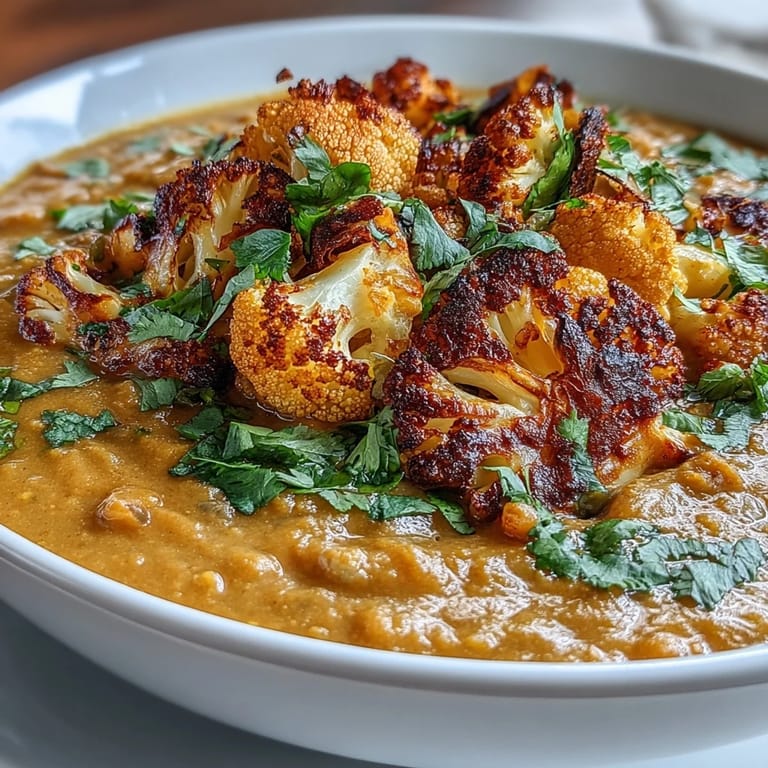
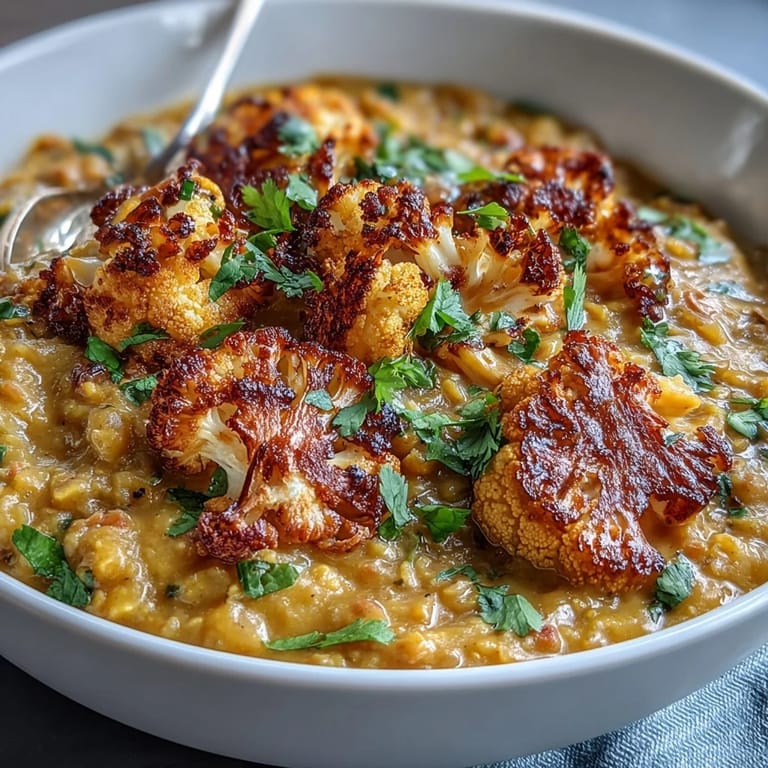
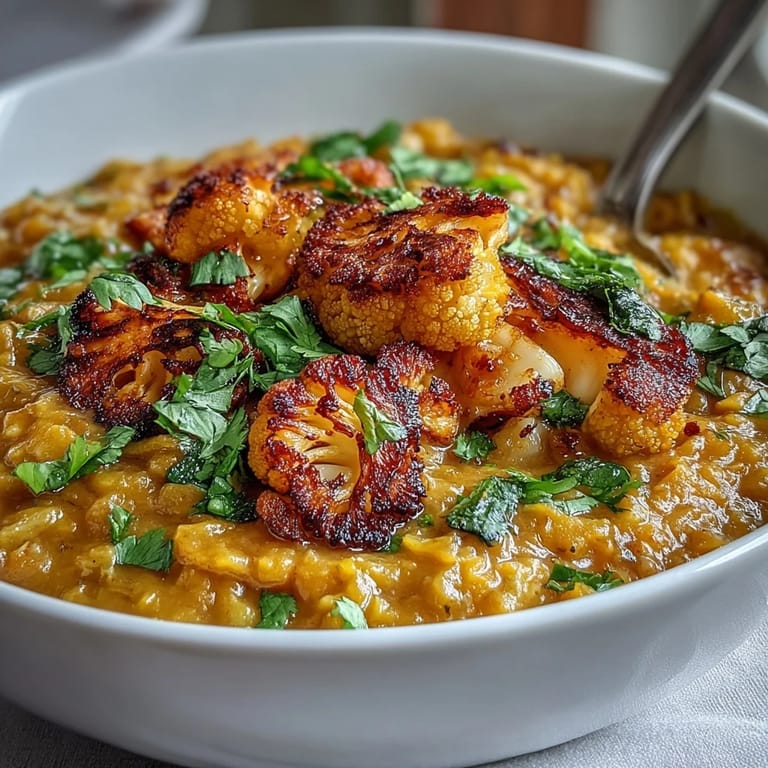
- Ladle the dhal into bowls and crown each portion with the golden-roasted cauliflower florets. Finish with a handful of fresh cilantro and serve while everything is still warm.
 Save
Save There was a moment last winter when my partner came home from a long day, and without saying anything, they sat down with a bowl of this dhal and just closed their eyes for a moment. That silence told me everything—sometimes food becomes a small ritual of taking care of yourself, a way of saying 'I notice you, you deserve something warm and good.' This dish does that.
Why This Combination Works So Well
The genius of pairing creamy dhal with crispy-roasted cauliflower isn't accidental—it's about textural contrast and flavor balance. Red lentils naturally want to become soft and comforting, so roasted cauliflower gives your palate something to look forward to in each spoonful. The cumin in both components ties them together, while the lemon juice and cilantro at the end prevent the whole dish from feeling heavy or one-dimensional. It's the kind of meal that feels both nourishing and exciting.
Customizing This Dish to Your Taste
One of my favorite things about this recipe is how flexible it is without losing its identity. If you prefer a lighter version, swap full-fat coconut milk for lite coconut milk—you'll lose a bit of richness but gain something cleaner-tasting. The chili is entirely optional; Priya's mother prefers hers without any heat, while my sister adds two for serious warmth. You can also experiment with the vegetable broth: a homemade version deepens the flavors significantly, but any broth works.
Beyond the Bowl
Serve this dhal over fluffy basmati rice for a complete meal, or tear into warm naan to scoop up the creamy lentils—both approaches feel right depending on your mood. Leftover dhal tastes even better the next day as the spices deepen and meld, and it reheats beautifully on the stovetop with a splash of extra broth. For extra texture and richness, consider toasting cashews or pumpkin seeds and scattering them over the top just before serving.
- Make it a full meal: Pair with basmati rice, naan, or flatbread for something substantial.
- Leftover magic: Dhal actually improves after a day in the refrigerator as spices continue to bloom.
- Toast your garnishes: A handful of toasted cashews or seeds adds elegance and keeps the dish interesting.
 Save
Save This is the kind of dish that reminds you why cooking matters—it's nourishing, deeply flavorful, and comes together in under an hour. Make it once, and I promise you'll find yourself reaching for it again and again.
Recipe FAQs
- → Can I make this ahead?
The dhal actually improves overnight as flavors meld. Store in the refrigerator for up to 4 days. Reheat gently, adding splash of water or broth to restore consistency. Roast cauliflower fresh before serving to maintain crisp texture.
- → What other lentils work?
Red lentils cook quickly and create a naturally creamy texture. Yellow split peas or masoor dal are excellent alternatives. Brown or green lentils require longer cooking and hold their shape better, resulting in a less creamy final dish.
- → How can I add more protein?
Top with toasted cashews, almonds, or pumpkin seeds for crunch and additional protein. Serve over quinoa or brown rice instead of basmati. A dollop of Greek yogurt or coconut yogurt adds protein and richness if not strictly vegan.
- → Can I freeze leftovers?
The lentil portion freezes beautifully for up to 3 months. Portion into airtight containers, leaving space for expansion. Cauliflower is best roasted fresh, though frozen roasted pieces work in soups or curries where texture matters less.
- → What sides complement this dish?
Warm naan or roti bread soaks up the creamy dhal beautifully. Fluffy basmati rice creates a complete meal. A simple cucumber raita, fresh tomato chutney, or pickled onions add bright contrast. Steamed greens like spinach or bok choy balance the richness.
- → How do I adjust the spice level?
Reduce or omit the green chili for milder flavor. Add extra chili or cayenne during cooking if you prefer more heat. The garam masala provides warmth without excessive spiciness. Always taste and adjust salt and lemon before serving.