 Save
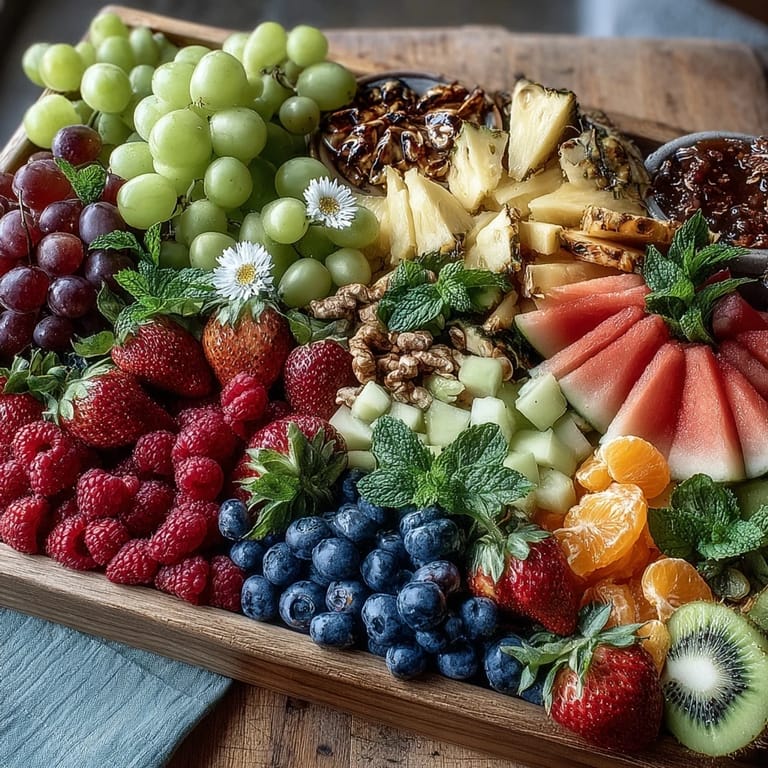
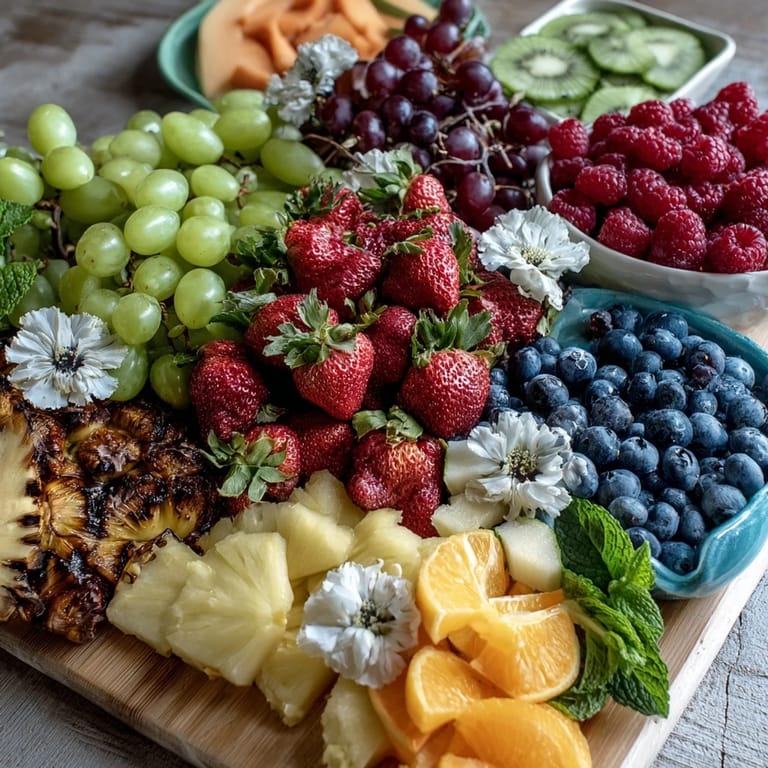
Save My cousin called three weeks before her graduation asking if I could help with the party setup, and the first thing she said was, "I don't want heavy food, I want something that looks like a celebration." That conversation stayed with me as I chopped and arranged fruit at her kitchen table the morning of the event. The idea came together naturally—a sprawling fruit display that would sit in the center of the yard, colorful enough to photograph, light enough that nobody would feel weighed down on a warm May afternoon. Edible flowers seemed like the perfect finishing touch, turning what could have been just a fruit platter into something that felt genuinely festive. By the time the first guests arrived, that table had become the focal point everyone gravitated toward.
What I didn't expect was how the fruit table became a gathering spot for conversations. Thirty minutes into the party, I found my cousin's grandmother standing there selecting strawberries while chatting with her old friends, and somehow that simple act of reaching for fruit together felt more meaningful than any formal seating arrangement could have been. The table had become a place where people naturally paused, smiled, and connected—it was doing exactly what my cousin had hoped for without any of the fuss.
Ingredients
- Seedless green grapes (3 cups): These provide sweetness and a fresh snap that people expect, and they practically disappear first because they're the least intimidating fruit to grab.
- Seedless red or black grapes (3 cups): The color contrast makes your table pop, and mixing varieties keeps people discovering something new with each reach.
- Strawberries (2 cups, hulled and halved): They're a crowd favorite and the deep red adds visual drama, so arrange them where light hits them directly.
- Pineapple (2 cups, bite-sized): This brings tropical brightness and a slight tartness that balances the sweetness of berries, plus it holds its color beautifully for hours.
- Watermelon (2 cups, wedges or balls): The jewel-toned pink and green striping is nature's design at its best, and a melon baller makes quick work of creating uniform pieces that look intentional.
- Cantaloupe (2 cups, wedges or balls): The warm peachy-orange tone fills in color gaps perfectly, and it stays firm enough to handle without turning to mush.
- Blueberries (2 cups): These nestle into gaps and add pockets of dark richness that make other colors appear brighter by contrast.
- Raspberries (2 cups): They're delicate and should be placed last because they bruise easily, but their texture creates visual interest against rounder fruits.
- Kiwis (2, peeled and sliced): The bright green inside against the brown skin creates a jewel-like effect when arranged overlapping, and the tartness cuts through sweetness beautifully.
- Oranges (2, peeled and segmented): Keep these separate and add them closest to serving time since the exposed flesh can dry out, but they add citrus brightness that ties everything together.
- Edible flowers (1 cup of pansies, violas, nasturtiums, marigolds, or borage): These must be certified food-grade and pesticide-free—never use florist flowers or anything from a treated garden, as the consequences aren't worth the risk.
- Fresh mint leaves (optional): A handful of mint tucked between clusters adds aroma and signals that this is intentionally composed, not just randomly piled fruit.
- Lemon slices (optional): These brighten the arrangement with white and yellow, and a squeeze of lemon juice on any cut fruit that sits longer prevents browning.
Tired of Takeout? 🥡
Get 10 meals you can make faster than delivery arrives. Seriously.
One email. No spam. Unsubscribe anytime.
Instructions
- Wash Everything Thoroughly:
- Rinse all fruits under cool water and pat completely dry with paper towels—any excess moisture will make your arrangement look wet and sad within minutes. Spend extra time on the edible flowers, gently rinsing them and letting them air-dry on a clean kitchen towel because they're more delicate than you'd expect.
- Cut and Prep Your Fruits:
- Work through your fruit in sections so you don't end up with a pile of prepped pieces sitting around oxidizing. Use a sharp knife for clean cuts on strawberries and kiwis, a melon baller for those perfect cantaloupe and watermelon spheres, and segment oranges by cutting between the membranes so each piece holds together.
- Set Your Canvas:
- Clear your serving table or board completely and give it a final wipe so your fruits aren't sitting on any dust or crumbs. If your table is outdoors, position it where it'll be shaded for at least part of the event since sun exposure will wilt delicate flowers and soften berries faster than you'd like.
- Build Your Color Sections:
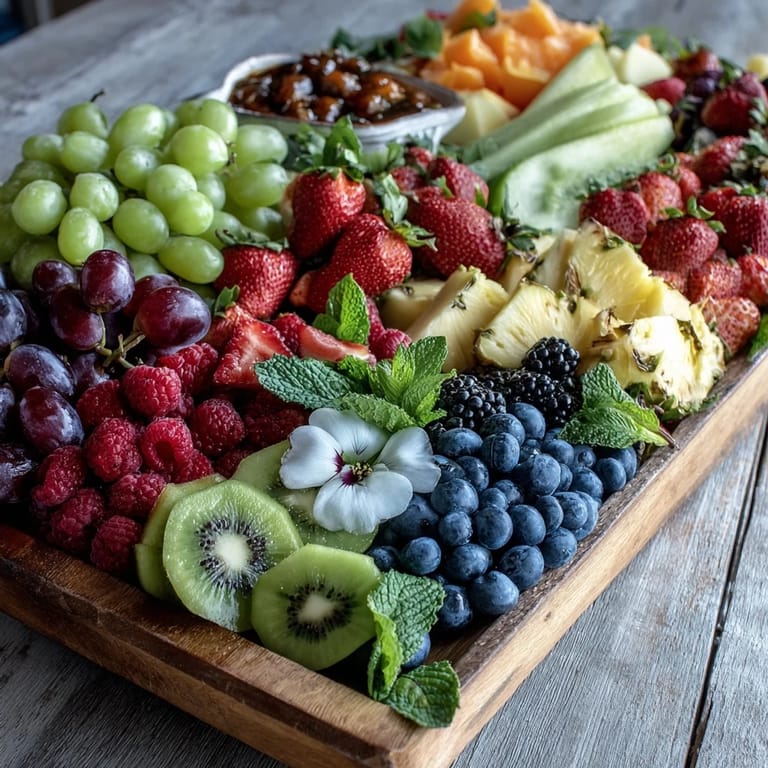
- Think about arranging fruit in colorful groupings or a loose pattern rather than mixing everything randomly—you want someone's eye to travel across the table and land on different colors naturally. Start with larger pieces like melon wedges or orange segments as anchors, then fill in with grapes and berries, creating a landscape that invites touch and exploration.
- Tuck in the Stars:
- This is where edible flowers and mint leaves transform your arrangement from fruit table to celebration centerpiece. Nestle them between fruit clusters and along the edges where they'll catch light and draw attention, placing them as close to serving time as possible so they stay fresh and vibrant.
- Final Garnish and Chill:
- Add lemon slices if you're using them, then cover the table loosely with plastic wrap and refrigerate until guests arrive. Pull it out 10-15 minutes before serving so the fruit reaches a perfect cool-but-not-frosty temperature that lets all those flavors actually taste like something.
 Save
Save There's something about watching people choose fruit from a beautiful table instead of reaching into a bowl that changes the whole dynamic. They slow down, they look at what they're selecting, they arrange it on their plate with actual intention—it becomes a moment of self-care rather than just grabbing a snack. That's the real magic of this approach.
Choosing Fruits by Season
Spring and early summer is your sweet spot for most of these fruits, but the beauty of a fruit table is how flexible it actually is. If strawberries aren't at their peak, swap in fresh mango or papaya for that peachy-orange tone; if raspberries are expensive, lean harder on blueberries; in late summer when cherries are perfect, they're absolutely stunning scattered across the table. The key is buying what looks vibrant at your market, not forcing fruits out of season just to match someone else's recipe.
The Edible Flower Question
I was genuinely nervous about the edible flowers part until I realized that specialty grocers and farmers markets actually sell them packaged specifically for food use. Local nurseries sometimes sell them too, and they'll be honest about whether they're pesticide-treated. That said, the flowers aren't essential to pull this off—if you can't source them, a bigger handful of fresh mint leaves or some lemon zest scattered across the table gets you ninety percent of the way there visually.
Setup and Service Strategy
The timing piece matters more than you'd think because a fruit table sitting in warm sun loses its crispness quickly, but a table that comes out too early looks sad by the time guests actually eat. I've learned that assembling everything 30-45 minutes before your event starts, keeping it chilled, then pulling it out just as people are arriving gives you that perfect window where everything looks alive and tastes cold and bright. If your party runs long, keep a backup supply of the most perishable items (berries and flowers) in the fridge so you can do a quick refresh halfway through.
- Provide small plates or napkins nearby so people can actually eat without making a mess.
- Position the table somewhere central where it's easily accessible but not so close to the main seating that everyone's crowding the same space.
- A small sign mentioning which flowers are edible makes guests feel confident trying them instead of wondering if they're decorative.
 Save
Save This is the kind of recipe that reminds me why cooking for people is less about following instructions perfectly and more about creating moments where they feel celebrated. A fruit table might seem simple, but it says something genuine about caring enough to make things beautiful.
Recipe FAQs
- → Which fruits work best for the display?
A mix of seedless grapes, strawberries, pineapple, cantaloupe, watermelon, blueberries, raspberries, kiwi, and oranges offers both color and flavor variety.
- → How should edible flowers be chosen?
Use only pesticide-free, food-grade edible flowers like pansies, violas, and nasturtiums to ensure safety and enhance presentation.
- → What’s the best way to prep the fruits?
Wash thoroughly, pat dry, cut larger fruits into bite-sized pieces, slice berries and kiwi, and optionally use a melon baller for melon varieties.
- → How to arrange the table for maximum impact?
Place fruits in colorful, overlapping sections or patterns, then tuck edible flowers and mint leaves between clusters for contrast and elegance.
- → Can garnishes enhance freshness or flavor?
Fresh mint leaves and sliced lemon add visual appeal and a subtle aromatic touch, while optional dips can complement the display.